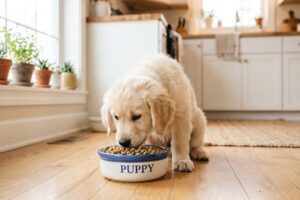
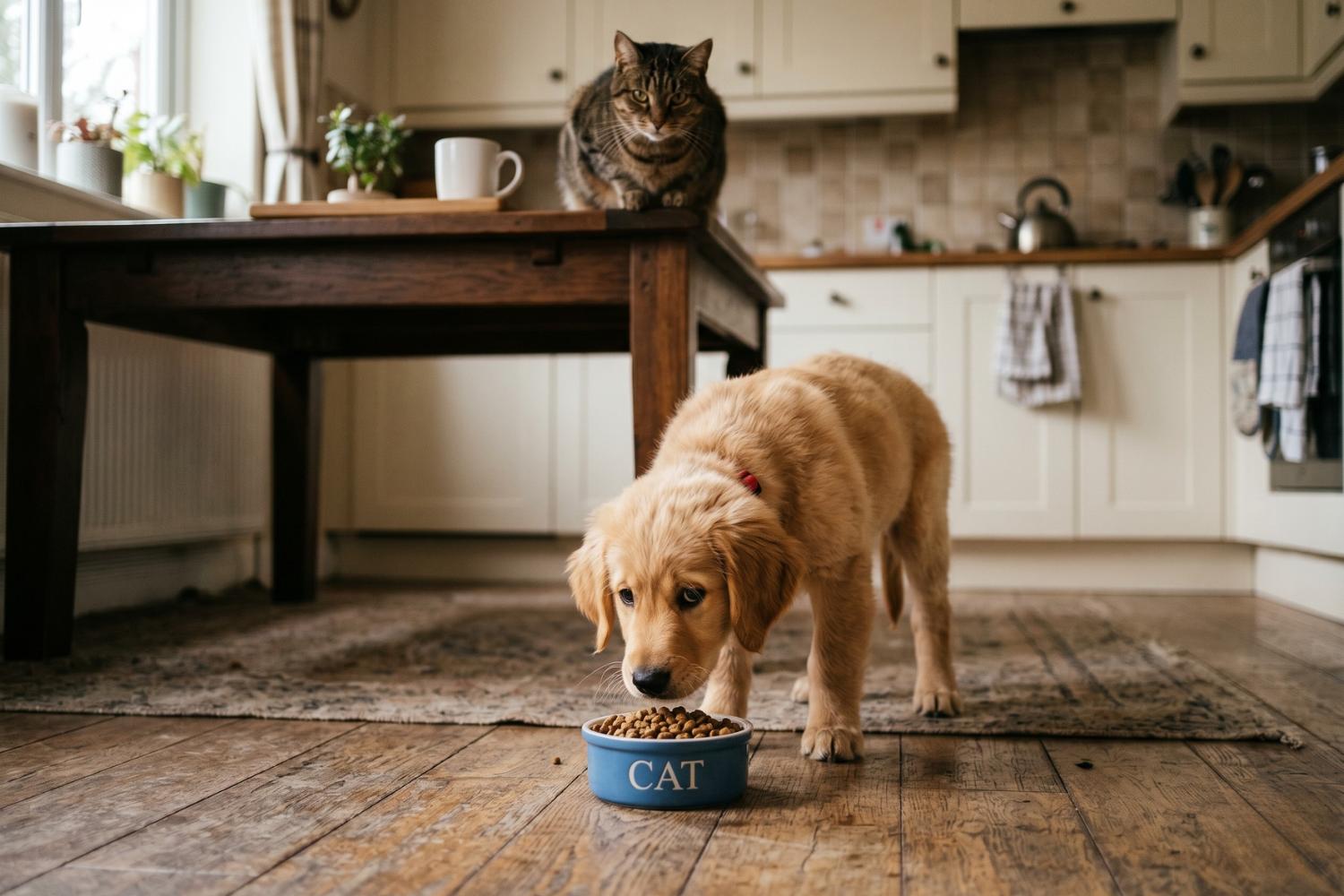
Many puppy owners experience the same surprising moment: their playful pup sneaks into the cat’s bowl and happily eats the food. At first glance, it may not seem like a big deal. After all, food is food… right?
Not exactly.
If you’ve been wondering ****, the short answer is yes—but only in very small, occasional amounts. However, it is not safe or healthy as a regular part of their diet.
In this guide, we’ll break down everything you need to know: why puppies are attracted to cat food, the risks involved, possible side effects, and what veterinarians actually recommend.
Why Do Puppies Love Cat Food So Much?
If your puppy keeps stealing cat food, you’re not alone. Many dog owners face this issue.
The reason is simple: cat food is more appealing to dogs.
Cat food is usually:
- Higher in fat
- Higher in protein
- Stronger in smell and flavor
Puppies, especially, are driven by smell and taste. So when they find something richer and more aromatic than their kibble, they naturally go for it.
But just because they love it doesn’t mean it’s good for them.
Can Puppies Eat Cat Food?
Yes, puppies can eat cat food occasionally without immediate danger. However, it is not designed for their nutritional needs.
Puppies require a balanced diet formulated specifically for growth, while cat food is designed for obligate carnivores (cats), not omnivores (dogs).
So while a small bite won’t harm them, regular consumption can lead to health issues.
Nutritional Differences Between Cat Food and Puppy Food
Understanding the difference helps explain why cat food is unsuitable for puppies.
1. Protein Levels
Cat food contains significantly more protein than puppy food. While protein is essential, excessive amounts can strain a puppy’s developing kidneys.
2. Fat Content
Cat food is much higher in fat, which can lead to digestive upset and weight gain in puppies.
3. Vitamins and Minerals
Puppy food is carefully balanced with:
- Calcium for bone growth
- Phosphorus for skeletal development
- DHA for brain development
Cat food lacks the proper ratios puppies need.
4. Taurine Levels
Cats require taurine in their diet, while dogs do not. Excess taurine doesn’t benefit puppies and may disrupt dietary balance.
Risks of Puppies Eating Cat Food
Feeding cat food to puppies regularly can cause several problems.
1. Digestive Upset
Puppies may experience:
- Diarrhea
- Vomiting
- Gas and bloating
Their stomachs are not built to handle rich, fatty food regularly.
2. Pancreatitis Risk
High fat intake can trigger pancreatitis, a painful and potentially serious condition in dogs.
3. Obesity
Cat food is calorie-dense. Even small amounts over time can lead to weight gain in puppies.
4. Nutritional Imbalance
Long-term feeding may result in deficiencies or excesses that affect growth.
5. Behavioral Issues
Once puppies get used to richer foods, they may refuse their regular dog food.
Short-Term Effects vs Long-Term Effects
Short-Term Effects (Occasional Eating)
If your puppy eats cat food once or twice, you may notice:
- Slight stomach upset
- Increased thirst
- Softer stool
In most cases, this passes quickly.
Long-Term Effects (Regular Consumption)
If cat food becomes a habit:
- Chronic diarrhea or vomiting
- Poor growth development
- Obesity
- Possible organ stress (especially pancreas and kidneys)
What to Do If Your Puppy Eats Cat Food
Don’t panic.
Here’s what you should do:
- Monitor your puppy
Watch for vomiting or diarrhea. - Provide fresh water
Helps prevent dehydration. - Skip the next meal if needed
This gives the stomach time to settle. - Avoid punishment
Puppies don’t understand food rules like humans do. - Contact a vet if symptoms persist
Especially if vomiting lasts more than 24 hours.
What Vets Recommend
Veterinarians are very clear on this topic:
- Puppies should eat high-quality puppy food only
- Cat food should not be part of a regular diet
- Occasional accidental consumption is okay, but not intentional feeding
Most vets also recommend:
- Feeding on a strict schedule
- Keeping cat food out of reach
- Using separate feeding areas for cats and dogs
How to Stop Puppies From Eating Cat Food
If your puppy keeps stealing cat food, try these strategies:
1. Feed Pets Separately
Feed your cat in a high place or different room.
2. Scheduled Feeding Times
Don’t leave food out all day.
3. Train “Leave It” Command
Basic obedience training can help control food stealing behavior.
4. Use Barriers
Baby gates or elevated surfaces can keep food inaccessible.
5. Consistency is Key
Puppies learn through repetition.
Healthy Alternatives for Puppies
If your puppy seems extra hungry or food-motivated, consider:
- High-quality puppy treats
- Vet-approved chews
- Puppy-safe enrichment toys
- Food puzzles for mental stimulation
These options satisfy cravings without harming health.
Common Myths About Puppies Eating Cat Food
Myth 1: “It’s all animal food, so it’s fine.”
False. Nutritional needs are completely different.
Myth 2: “Protein is always good for puppies.”
Too much protein can be harmful in excess.
Myth 3: “A little cat food improves coat health.”
There is no evidence supporting this for dogs.
Frequently Asked Questions
Can puppies eat cat food every day?
No. It can lead to long-term health issues and nutritional imbalance.
Is wet cat food worse than dry cat food for puppies?
Both are unsuitable. Wet cat food is often even higher in fat.
What happens if my puppy eats cat food once?
Usually nothing serious—just monitor for stomach upset.
Why does my puppy prefer cat food over dog food?
Because it smells stronger and tastes richer.
Final Thoughts
While the answer to **** is technically yes in small amounts, it should never become a habit. Puppies need carefully balanced nutrition to grow healthy, strong, and active.
Occasional sneaky bites won’t cause harm, but consistent feeding can lead to digestive issues, weight gain, and long-term health problems.
The best approach is prevention, proper feeding routines, and a well-balanced puppy diet.
Your puppy’s health starts with what’s in their bowl—so make it the right one.