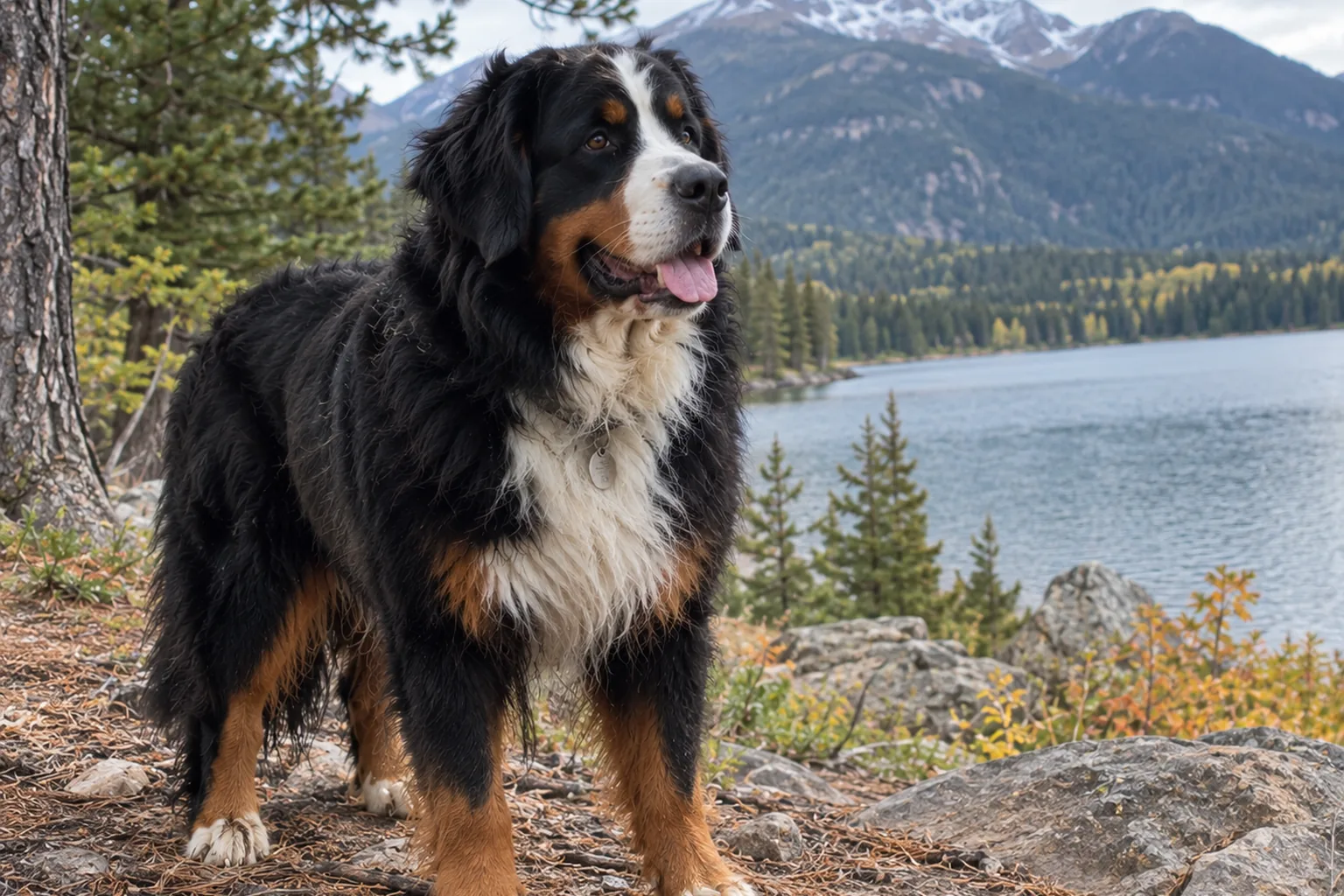
Bernese Mountain Dogs are hard to miss. They’re big, beautiful dogs with their distinctive black, white and rust-coloured coats, and they’re often known for being affectionate and devoted to their families.
But bringing home a Bernese Mountain Dog—especially a puppy—also means being prepared for a large, strong dog that needs training, exercise, grooming and plenty of time with its people.
If you’re considering a Bernese Mountain Dog or already have one at home, here’s what you should know about caring for, exercising and training this gentle giant.
What Is the Temperament of a Bernese Mountain Dog?
Bernese Mountain Dogs are generally known for having a gentle, affectionate and loyal temperament.
They tend to form strong bonds with their families and usually enjoy being involved in everyday family life. Many Berners are friendly and loving without being constantly demanding of attention.
They can also have a sensitive side. Harsh corrections or heavy-handed training methods aren’t a good match for most Bernese Mountain Dogs. They generally respond much better to calm, consistent training and positive reinforcement.
Early socialization is important, too. A Bernese Mountain Dog puppy should gradually experience different people, environments, sounds, surfaces and everyday situations while they are young.
Because these dogs become very large, good manners matter. A behaviour that seems harmless in a small puppy—such as jumping on people—can become much more difficult when that puppy grows into a 70- to 115-pound adult.
Individual temperament will always vary, so breeding, early experiences, socialization and training all play a role in the dog your puppy eventually becomes.
How to Take Care of a Bernese Mountain Dog
Caring for a Bernese Mountain Dog involves more than providing food, water and a daily walk.
Grooming
Bernese Mountain Dogs have thick double coats and they shed. Regular brushing helps remove loose hair, reduce tangles and keep their coat in good condition.
Expect heavier shedding at certain times of the year.
Their basic grooming routine should also include nail trimming, dental care and checking and cleaning their ears when necessary.
Feeding
A Bernese Mountain Dog needs a nutritionally complete diet appropriate for their age and life stage.
Bernese puppies grow quickly, but faster isn’t necessarily better. Large-breed puppies have specific nutritional needs while their bones and joints are developing, so talk to your veterinarian about an appropriate large-breed puppy food and feeding schedule.
Keeping your Berner at a healthy body condition is also important throughout their life.
Veterinary Care
Routine veterinary care should include regular wellness exams, vaccinations, parasite prevention and dental care based on your veterinarian’s recommendations.
Bernese Mountain Dogs can be affected by certain inherited and large-breed health problems. If you’re considering a puppy, ask the breeder about the health testing performed on the parents rather than relying on statements that the parents simply “look healthy.”
Keep Them Cool
That beautiful thick coat was made for cooler conditions.
Bernese Mountain Dogs can struggle in hot weather, so exercise may need to be moved to the cooler parts of the day during summer. Make sure they always have access to shade and fresh water, and watch carefully for signs of overheating.
Regular grooming, veterinary care and training can all be part of caring for a large breed like the Bernese Mountain Dog. Pupify can also help dog owners find dog services near them when they need additional support.
Do Bernese Mountain Dogs Need a Lot of Exercise?
Bernese Mountain Dogs need regular exercise, but they aren’t typically dogs that need to run for hours every day.
Most adult Berners benefit from a combination of walks, outdoor exploration, play and mental stimulation.
The goal isn’t simply to tire them out. Appropriate daily activity helps maintain a healthy weight, gives them an outlet for their energy and provides valuable mental stimulation.
Activities can include:
- Daily walks
- Exploring and sniffing
- Play sessions
- Basic obedience training
- Food puzzles and enrichment
- Age-appropriate hiking and outdoor adventures
Their exercise should always be adjusted for the individual dog’s age, health, fitness level and the weather.
How Much Exercise Does a Bernese Mountain Dog Need?
A healthy adult Bernese Mountain Dog will often do well with around an hour or more of activity spread throughout the day, but there isn’t one exercise number that fits every Berner.
Some will happily do more, while others are content with less.
A leisurely sniffing walk is also different from an hour of strenuous running, so pay attention to the type and intensity of exercise rather than watching the clock alone.
Puppies are different.
A growing Bernese Mountain Dog puppy shouldn’t simply follow an adult exercise routine. Their developing bodies need appropriate activity without excessive repetitive or high-impact exercise.
Free play, short walks, training sessions and opportunities to explore can provide plenty of physical and mental activity for a young puppy.
If you’re unsure how much exercise is appropriate at a particular stage of your puppy’s growth, your veterinarian can help you develop a plan.
When Do Bernese Mountain Dogs Calm Down?
If your Bernese Mountain Dog puppy currently seems to have two settings—sleeping and causing chaos—you may be wondering when things get easier.
There isn’t an exact age when a Bernese Mountain Dog suddenly becomes calm.
Berners are a large breed and can take time to mature physically and mentally. Many owners notice their dogs becoming more settled as they move out of adolescence and toward adulthood, often somewhere around 2 to 3 years of age.
That doesn’t mean you have to wait several years for a well-behaved dog.
Training, routine, appropriate exercise, mental stimulation and teaching your puppy how to settle can make a huge difference long before full maturity.
It’s also worth remembering that a tired puppy isn’t automatically a calm puppy. Overtired puppies can sometimes become even more difficult to manage. Rest and downtime are important parts of raising a puppy, too.
How to Train a Bernese Mountain Dog
Training should begin as soon as your Bernese Mountain Dog comes home.
Because Berners are intelligent but can also be sensitive, training generally works best when it is positive, consistent and rewarding.
Start with everyday skills that will matter when your dog is fully grown.
Teach your Berner to walk politely on a leash, come when called, wait at doors, settle calmly, leave unwanted objects alone and greet people without jumping.
Keep training sessions relatively short and enjoyable. Several five-minute training sessions throughout the day can be more productive than one long session when your dog has already lost interest.
Use rewards your dog values, which might include food, toys, praise or access to something they enjoy.
Consistency is especially important. If jumping on the couch is allowed today but forbidden tomorrow, your dog has no clear way to understand what you want.
How to Train a Bernese Mountain Dog Puppy
Training a Bernese Mountain Dog puppy starts with the basics.
Start With Their Name and Attention
Teach your puppy that hearing their name means something good is about to happen. Say their name once and reward them when they look toward you.
That simple behaviour becomes the foundation for many other skills.
Begin House Training Immediately
Take your puppy outside frequently, especially after waking, eating, drinking and playing.
Praise and reward them when they go in the appropriate place. Accidents will happen, so concentrate on supervision and routine rather than punishment.
Introduce Crate Training Gradually
A crate can be useful for sleeping, house training and providing a safe place to relax.
Build a positive association with it rather than using the crate as punishment.
Teach Loose-Leash Walking Early
A Bernese Mountain Dog puppy is much easier to teach than a full-grown Berner pulling at the end of a leash.
Reward your puppy for staying near you and walking with a loose leash before pulling becomes an established habit.
Work on Recall
Practice coming when called in easy, controlled situations and reward generously.
Don’t repeatedly call your puppy when you know they’re unlikely to respond. You want coming to you to become a behaviour with a strong history of positive outcomes.
Practice Handling
Gently get your puppy accustomed to having their paws, ears, mouth and body handled.
This can make future grooming, nail trimming and veterinary visits much easier.
Socialize Without Overwhelming Them
Socialization doesn’t mean your puppy needs to meet every person and dog they see.
Instead, help them develop positive or neutral experiences with the world around them. Introduce new things gradually and give your puppy space if they appear uncomfortable.
Is a Bernese Mountain Dog Right for You?
Bernese Mountain Dogs can be wonderful companions for families prepared for their size, grooming requirements, training needs and desire to be part of family life.
They aren’t maintenance-free dogs. They shed, they become very large, they require consistent training, and responsible owners should understand the health considerations associated with the breed.
In return, the Berner’s gentle nature and strong attachment to their family are a big part of why so many people fall in love with the breed.
Before bringing home a Bernese Mountain Dog puppy, take the time to learn about the breed and find breeders in your area who you can speak with about their dogs, health testing and puppy-raising practices.
Looking for a Bernese Mountain Dog Puppy?
If you’re beginning your search for a Bernese Mountain Dog, Pupify helps Canadians find puppies for sale in Canada and connect directly with breeders.
Take your time, ask questions and learn about the breeder’s dogs, health testing, puppy-raising practices and what support they provide after their puppies go home.
Finding a puppy isn’t only about finding the breed you want. It’s about finding the right fit for your family and starting that relationship with good information.