Children with autism often experience the world in ways that others may not fully understand. One common safety concern for families is elopement behavior, where a child leaves a safe area or caregiver without warning. According to autism research organizations, wandering or elopement occurs in a significant number of children on the autism spectrum, creating serious safety risks.
For parents and caregivers, this situation can be incredibly stressful. A child may wander away from home, school, or a public place, sometimes drawn by curiosity, sensory interests, or anxiety. In these situations, every second matters.
One powerful solution that has gained attention is a tracking dog trained elopement autism. These specially trained dogs use their extraordinary scent-tracking abilities to locate children who wander away, helping families respond quickly and effectively in emergencies.
Through platforms like Pupify, families can connect with independent breeders, trainers, and service-dog professionals who offer trained dogs and related services. This connection-based marketplace allows buyers and sellers in the dog community to interact directly.
In this article, we’ll explore how a tracking dog trained elopement autism works, why these dogs are effective, and how they can help improve safety for children and peace of mind for families.
Understanding Autism Elopement
Autism elopement refers to situations where a child with autism leaves a safe environment unexpectedly. Unlike typical wandering, elopement can happen quickly and without clear warning signs.
Common reasons children with autism may wander include:
- Curiosity about something they see or hear
- Sensory attraction (lights, water, sounds)
- Desire to escape overwhelming environments
- Difficulty understanding danger
- Attempting to reach a favorite place or object
Unfortunately, wandering can expose children to dangerous situations such as traffic, water hazards, or getting lost in unfamiliar areas.
Parents often rely on strategies like:
- GPS trackers
- Secure fencing
- Door alarms
- Increased supervision
However, when a child disappears, search and rescue support becomes critical. This is where a tracking dog trained elopement autism can make a life-saving difference.
What Is a Tracking Dog Trained for Autism Elopement?
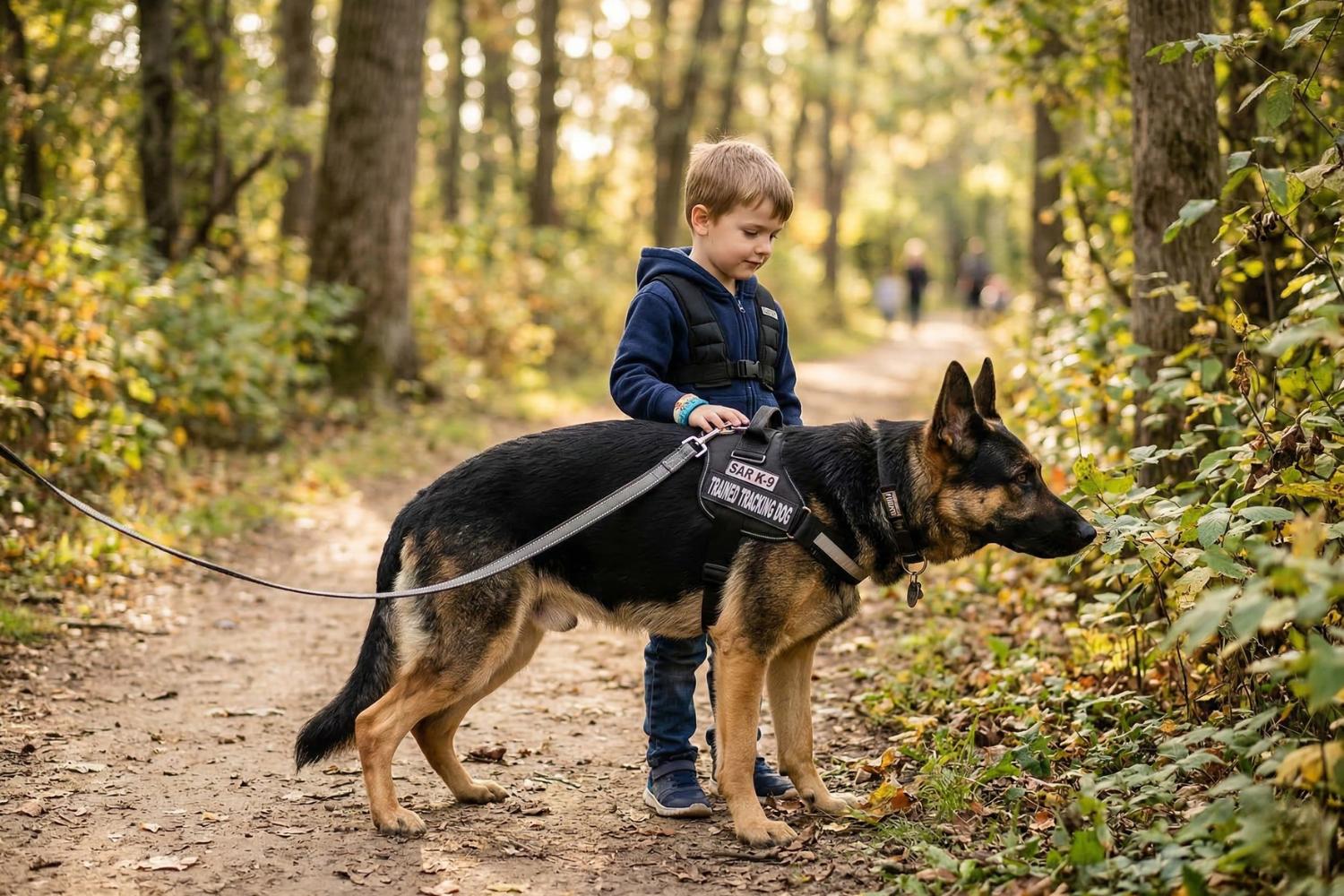
A tracking dog trained elopement autism is a specially trained dog capable of locating a missing child by following their scent trail.
These dogs are not just companions — they are working dogs trained to track human scent over distances and through various environments.
Tracking dogs rely on:
- Powerful scent detection abilities
- Advanced obedience training
- Specialized search-and-rescue techniques
Dogs have up to 300 million scent receptors, compared to around 6 million in humans. This remarkable ability allows them to track a specific individual even hours after the person has left an area.
For families with children who are prone to wandering, a tracking dog provides a proactive safety layer that can help locate a child quickly if they go missing.
How Tracking Dogs Help Improve Child Safety
1. Rapid Location of Missing Children
When a child with autism wanders away, time is critical. A tracking dog trained elopement autism can follow the child’s scent trail and lead caregivers or responders directly to their location.
Unlike electronic tracking devices that may fail or lose signal, scent tracking works in many environments.
Benefits include:
- Faster search times
- Increased chance of safe recovery
- Reduced reliance on large search teams
2. Support During Search and Rescue Situations
Tracking dogs are commonly used in search and rescue operations because they can cover large areas quickly and efficiently.
In the context of autism elopement, they can help search:
- Parks and forests
- Urban neighborhoods
- School grounds
- Public events
Their ability to navigate different terrains makes them valuable partners during emergencies.
3. Reducing Parental Anxiety
Parents of children with autism often live with the constant fear of wandering incidents. Knowing that a trained tracking dog is available can provide significant emotional relief.
Families benefit from:
- Increased confidence during outings
- Peace of mind at home
- A faster response plan in emergencies
A tracking dog trained elopement autism becomes a trusted member of the family’s safety strategy.
4. Promoting Independence for Children
While safety is the primary goal, tracking dogs can also support a child’s independence.
Children with autism may feel more comfortable exploring their environment when families have additional safety tools in place. This balance helps children grow and develop confidence while ensuring caregivers remain prepared.
The Training Behind Autism Tracking Dogs
Training a dog for autism elopement tracking requires extensive preparation and professional expertise.
Typical training programs include:
Scent Identification Training
Dogs learn to identify a specific person’s scent from items such as:
- Clothing
- Bedding
- Personal belongings
Once familiar with the scent, the dog can track it across long distances.
Advanced Tracking Skills
Tracking dogs are trained to follow scent trails through complex environments, including:
- Pavement and urban areas
- Grass and wooded trails
- Crowded public spaces
This training ensures they remain effective even when conditions are challenging.
Obedience and Focus
A tracking dog must remain calm, disciplined, and focused during search operations. Obedience training ensures the dog responds reliably to commands from its handler.
Environmental Exposure
Professional trainers expose dogs to various environments so they can perform confidently in different locations, including:
- Cities
- Rural areas
- Parks and recreational spaces
Breeds Commonly Used for Tracking Work
While many breeds have strong scent abilities, certain dogs are particularly well-suited for tracking work.
Popular breeds include:
- Bloodhounds
- German Shepherds
- Labrador Retrievers
- Belgian Malinois
These dogs combine scent tracking ability with intelligence, stamina, and trainability.
However, the most important factor is proper training, not just breed.
Finding Tracking Dogs and Training Services
Families seeking support dogs often look for reliable ways to connect with experienced dog professionals.
Platforms such as Pupify help connect independent buyers and sellers in the dog community. Through the platform, users can explore listings related to dogs, training services, and other dog-related products offered by independent providers.
It’s important to remember that Pupify acts as a connection-based marketplace, meaning it helps users discover and connect with others in the dog community rather than acting as a seller, broker, or transaction manager.
This structure allows families to research options and communicate directly with professionals who specialize in tracking or service dog training.
Other Safety Tools for Autism Wandering
While a tracking dog trained elopement autism can be a powerful safety solution, many families combine multiple tools for maximum protection.
Helpful safety strategies include:
GPS Tracking Devices
Wearable devices allow parents to monitor a child’s location in real time.
Door Alarms
Alerts caregivers if a door is opened unexpectedly.
Identification Bracelets
Provide important information if a child is found by others.
Community Awareness
Neighbors, teachers, and local authorities can help watch for wandering behavior.
When used together, these strategies create a comprehensive safety system.
Preparing a Tracking Plan for Families
Families considering a tracking dog should also prepare a clear response plan.
Key steps include:
- Keep scent articles ready (clothing items that hold the child’s scent).
- Inform caregivers and teachers about wandering risks.
- Practice emergency procedures.
- Know who to contact for search assistance.
Preparation helps ensure the tracking process begins quickly if needed.
Ethical Considerations and Responsible Ownership
Working dogs require ongoing care, training, and attention. Families should ensure they can provide:
- Daily exercise
- Regular veterinary care
- Continued training reinforcement
- A supportive home environment
Tracking dogs are not just safety tools — they are living companions that deserve responsible care and respect.
The Future of Autism Safety Support
Technology and training methods continue to evolve, creating new opportunities to improve safety for children with autism.
Innovations include:
- Advanced tracking techniques
- Integration with GPS technology
- Expanded service-dog training programs
As awareness grows, more families are discovering how trained dogs can contribute to safer environments for children with autism.
Final Thoughts
Autism elopement can present serious safety challenges for families. However, solutions such as a tracking dog trained elopement autism offer powerful support during emergencies.
These highly trained dogs use their natural scent-tracking abilities to locate missing children quickly, helping reduce search times and improve recovery outcomes.
By combining trained tracking dogs with other safety strategies, families can build a stronger protection plan that allows children to explore their world more safely.