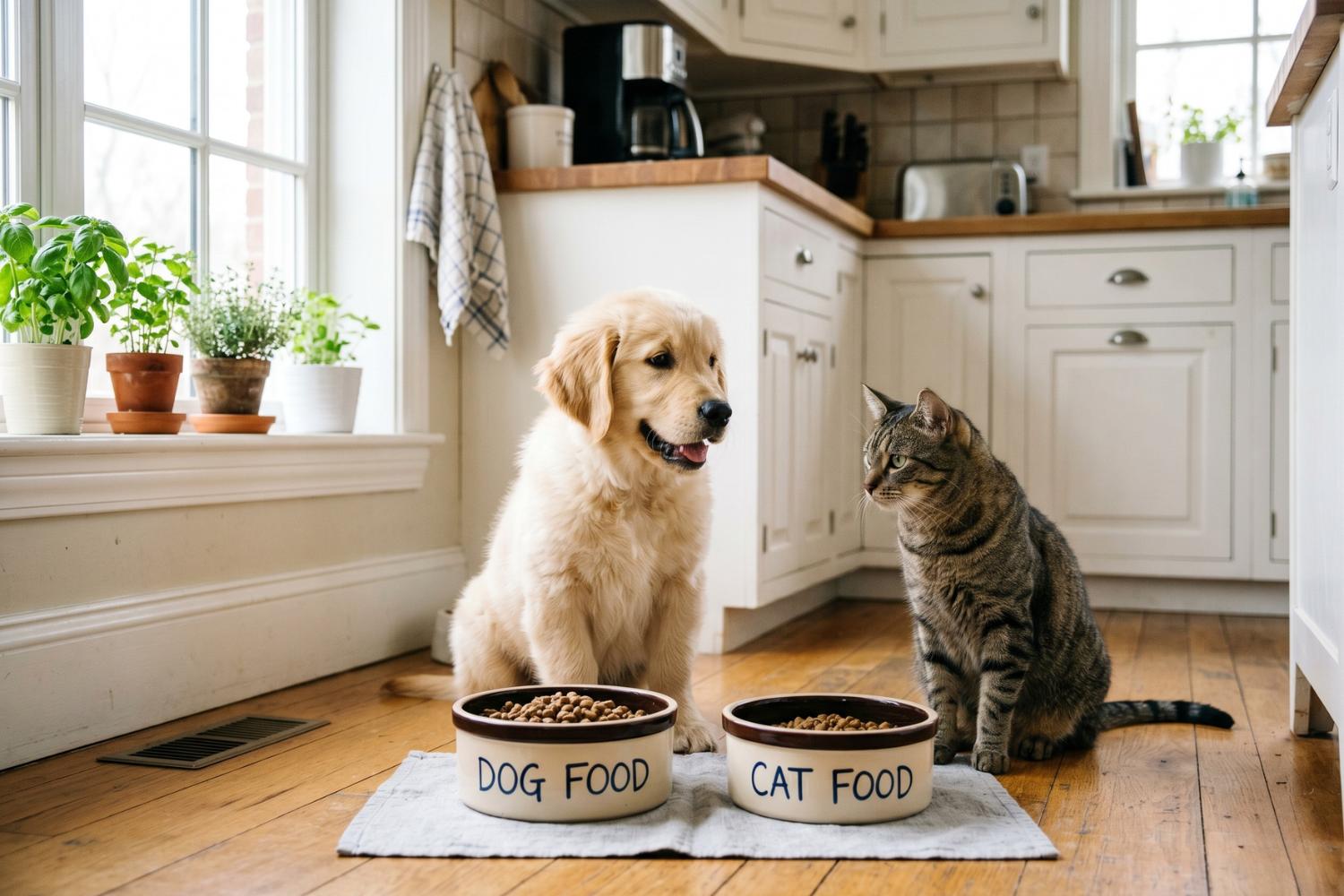
When you bring a new puppy home, every little detail about their diet suddenly matters. From choosing the right kibble to avoiding harmful treats, responsible pet parents want to do everything right. One common question many dog owners ask is: can puppies eat cat food?
At first glance, it might not seem like a big deal. After all, both are pet foods, right? But the truth is a bit more complicated—and feeding your puppy the wrong food regularly can lead to health problems.
In this guide, we’ll break down everything you need to know about puppies and cat food, including whether it’s safe, potential risks, and what to do if your pup sneaks a bite.
Can Puppies Eat Cat Food?
The short answer is: yes, puppies can eat cat food occasionally—but they should not eat it regularly.
Cat food isn’t toxic to dogs, so if your puppy sneaks a few bites, there’s usually no need to panic. However, cat food is specifically formulated for cats, which have very different nutritional needs compared to dogs.
While a one-time snack won’t harm your puppy, making cat food a regular part of their diet can cause serious health issues over time.
Why Puppies Are Attracted to Cat Food
If you’ve ever caught your puppy sniffing around the cat’s bowl, you’re not alone. Puppies are often drawn to cat food for a few key reasons:
- Stronger smell: Cat food is typically richer and more aromatic
- Higher fat content: It tastes more appealing to dogs
- Curiosity: Puppies explore everything—especially food
Because cat food is more calorie-dense and flavorful, it can seem like a “treat” to your puppy, even though it’s not suitable for regular consumption.
Key Nutritional Differences Between Dog and Cat Food
Understanding the difference between dog and cat food helps explain why feeding cat food to puppies isn’t ideal.
1. Protein Levels
Cat food contains significantly higher protein levels because cats are obligate carnivores. Puppies, while needing protein, require a more balanced diet.
2. Fat Content
Cat food is richer in fats, which can lead to:
- Weight gain
- Digestive issues
- Long-term health concerns
3. Nutrient Balance
Dog food is carefully balanced with:
- Carbohydrates
- Vitamins
- Minerals
Cat food lacks the proper balance puppies need for healthy growth.
What Happens If a Puppy Eats Cat Food?
If your puppy eats cat food occasionally, you might notice mild symptoms such as:
- Upset stomach
- Loose stools
- Vomiting
These symptoms usually pass quickly. However, if your puppy eats cat food regularly, it can lead to more serious issues like:
- Obesity
- Pancreatitis
- Nutritional deficiencies
If your puppy shows persistent symptoms, consult a veterinarian immediately.
Can Puppies Eat Cat Food in Emergencies?
In a pinch, cat food can be used as a temporary substitute—but only for a short time.
For example, if you run out of puppy food late at night, feeding a small portion of cat food once is okay. However, you should switch back to proper puppy food as soon as possible.
Why Puppies Need Specialized Food
Puppies are in a critical stage of growth and development. Their diet must support:
- Bone development
- Muscle growth
- Brain development
- Immune system strength
That’s why high-quality puppy food is specifically formulated with the right balance of nutrients.
Risks of Feeding Cat Food to Puppies Regularly
Feeding cat food regularly might seem harmless at first, but over time it can create serious health concerns.
1. Digestive Problems
Puppies have sensitive stomachs. Rich cat food can lead to:
- Diarrhea
- Vomiting
- Gas
2. Excess Weight Gain
Because cat food is calorie-dense, it can quickly lead to obesity, especially in less active puppies.
3. Pancreatitis Risk
High fat levels in cat food can trigger pancreatitis—a painful and potentially dangerous condition.
4. Nutritional Imbalance
Your puppy may miss essential nutrients needed for proper development.
How to Stop Your Puppy from Eating Cat Food
If you have both a cat and a puppy at home, preventing food stealing can be tricky—but manageable.
1. Feed Pets Separately
Keep feeding areas in different rooms to avoid temptation.
2. Use Elevated Surfaces
Place cat food in a higher spot where your puppy can’t reach.
3. Create Feeding Schedules
Avoid leaving food out all day. Instead, feed at set times.
4. Training Matters
Teach commands like:
- “Leave it”
- “No”
Consistency is key.
Better Alternatives to Cat Food
If your puppy seems bored with their food, don’t switch to cat food. Instead, try:
- High-quality puppy treats
- Wet dog food mixed with kibble
- Vet-approved toppers
These options are safer and still appealing.
When to Call a Vet
You should contact your vet if your puppy:
- Eats a large amount of cat food
- Shows ongoing vomiting or diarrhea
- Appears lethargic
- Stops eating regular food
Early intervention can prevent complications.
Common Myths About Puppies and Cat Food
Myth 1: Cat food is better because it has more protein
Truth: Too much protein isn’t always beneficial for puppies.
Myth 2: A little cat food every day is fine
Truth: Even small amounts regularly can lead to imbalance.
Myth 3: Puppies and cats can share food
Truth: Their dietary needs are completely different.
Final Thoughts
So, can puppies eat cat food? Yes—but only occasionally and in small amounts.
While it’s not toxic, cat food is not designed for puppies and should never replace their regular meals. Feeding your puppy a balanced, high-quality diet is essential for their growth, energy, and long-term health.
As a responsible pet owner, keeping your puppy away from cat food and providing proper nutrition will ensure they grow into a happy, healthy dog.