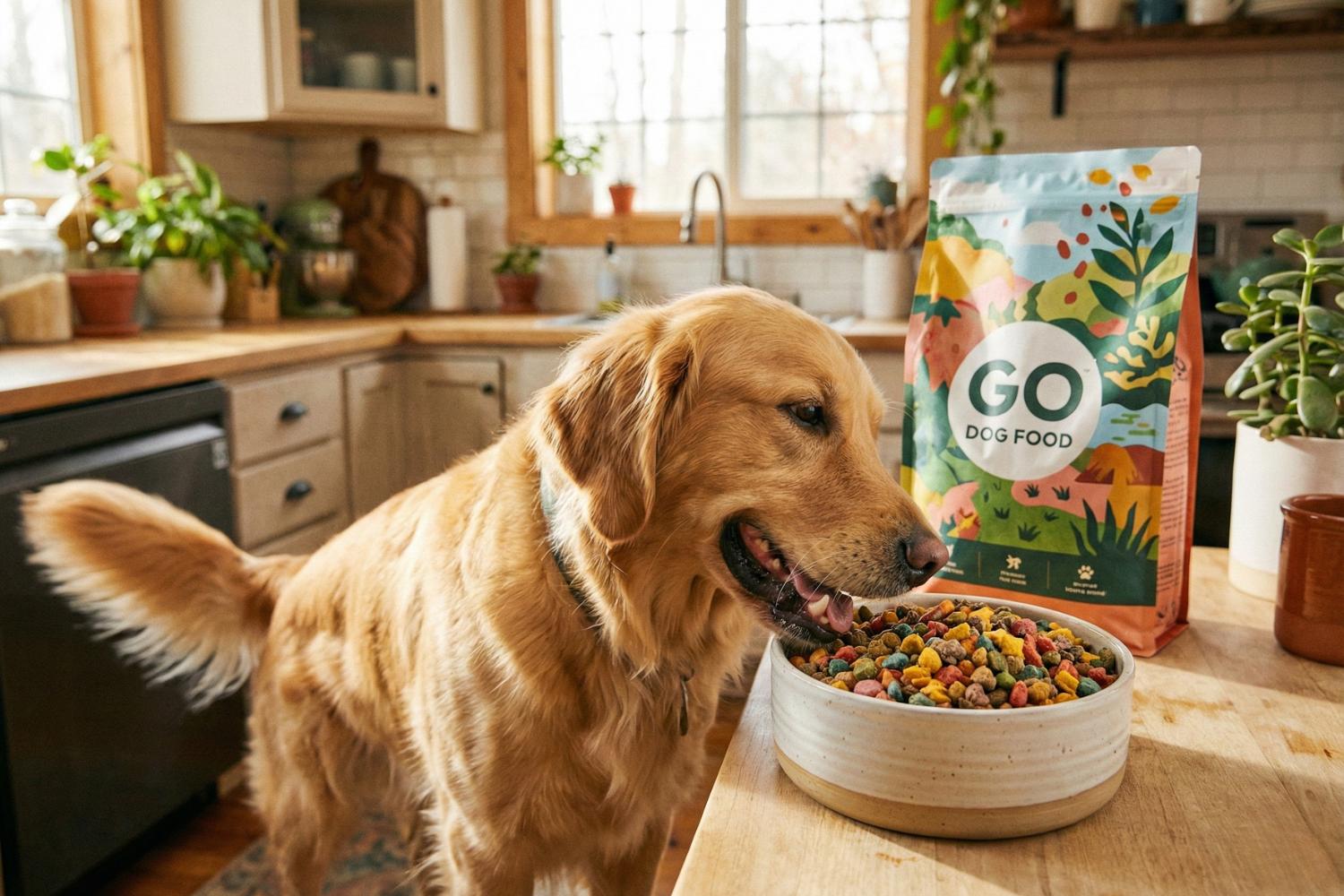
Choosing GO! SOLUTIONS dog food starts with the exact recipe, your dog’s nutritional needs and the cost of feeding it.
This guide explains how to read product information, check recall notices, plan portions and compare daily costs. It is a purchasing guide, rather than a report of hands-on feeding tests or a complete recall history.
About Go Dog Food
GO! SOLUTIONS is part of Petcurean’s pet food range. Its dog foods include different recipes and formats, so compare the specific product you intend to buy.
Check its current label for ingredients, calories, feeding directions and the nutritional adequacy statement. Read any qualifications carefully, particularly when choosing food for a growing puppy.
If Canadian manufacturing matters to your purchase, confirm the production location for that exact recipe and format. Ask the manufacturer about information missing from the label.
You can explore current products on the official GO! SOLUTIONS website.
Ingredients in Go Dog Food
GO! recipes contain different ingredients. Check the current label for the exact food you are considering rather than treating a brand-wide ingredient list as applying to every product.
Record the full recipe name and read the complete ingredient list. A protein named on the front of the package does not tell you everything the recipe contains.
If your veterinarian has advised avoiding a particular ingredient, check the whole list and ask the manufacturer about anything unclear. Do not assume a grain-free recipe is suitable simply because your dog has itching or digestive symptoms.
Check ingredients alongside the nutritional adequacy statement, calorie content and feeding directions. Ask the manufacturer about sourcing or recipe changes when those details matter to your purchase.
Keep a photograph of the label so you can compare future purchases and share the exact product information with your veterinarian.
How to Check Recall Notices.
Before buying or feeding a product, check current notices from the manufacturer and official recall sources. This guide does not provide a complete historical recall record.
Canadian shoppers can search the Government of Canada’s recalls and safety alerts. For products purchased in the United States, also check the FDA’s animal-food recalls and withdrawals.
When checking a notice, compare the exact product name, package size, lot code and best-before date with your packaging. A notice affecting one product or batch should not be treated as applying to every recipe.
Keep the original packaging and purchase details. If your product matches a notice, follow its instructions and contact the manufacturer or retailer with questions.
Feeding Guide
Use the feeding directions for the exact GO! recipe you are buying. A single chart based only on breed size cannot account for differences in calorie content between foods or your dog’s individual needs.
Before planning portions, record:
- The full recipe name and whether it is dry or wet food.
- Its calorie content and the units used.
- Whether the feeding table gives a daily amount or an amount per meal.
- The life stage covered by its nutritional adequacy statement.
- Your dog’s current weight and any dietary instructions from your veterinarian.
Ask your veterinarian about an appropriate daily allowance and meal routine. Include treats, toppers and other foods when discussing the total.
Measure the agreed allowance and divide it between meals. If several people feed your dog, keep a shared record to avoid giving extra portions accidentally.
For example, if your agreed plan specifies an amount in grams per day, weigh that daily allowance before dividing it between meals. Do not substitute a cup measurement from a different recipe.
Review the plan as your dog’s weight, body condition or needs change. Keep the current packaging available so you can refer to its calorie information and feeding directions.
Pros & Cons of Go Dog Food
Consider the exact recipe’s practical advantages and limitations before buying.
What to check:
- Suitability: Does its nutritional adequacy statement cover your dog’s life stage and intended feeding use?
- Product information: Are the ingredients, calories and feeding directions clearly available?
- Availability: Can you regularly buy the same recipe and pack size?
- Cost: What is the estimated daily feeding cost, including delivery where relevant?
- Dietary requirements: Does it fit any instructions from your veterinarian?
A variety of recipes gives shoppers options, but it does not mean every formula suits every dog. Claims about better protein quality, lower prices or improved health need evidence tied to the specific products being compared.
Go Dog Food vs Other Brands
Compare a specific GO! recipe with a specific competing product intended for the same life stage and feeding purpose. Brand names alone do not establish differences in quality, price or suitability.
Record each product’s recipe name, format, nutritional adequacy statement, calorie content, pack size and current price.
Then calculate the feeding cost using an appropriate daily amount:
Daily cost = package price ÷ package weight in grams × grams fed per day
For example, a hypothetical $75 bag weighing 10,000 g costs $1.50 per day when feeding 200 g daily. This illustrates the calculation; it is not a GO! price or feeding recommendation.
Include delivery charges when relevant, and check whether your retailer consistently stocks the exact recipe. If the foods have different calorie contents, do not assume your dog would eat the same weight of each.
Tips for Switching to Go Dog Food
Before changing foods, record what your dog currently eats, the new recipe and any dietary instructions from your veterinarian.
Ask about a suitable transition plan, particularly if your dog has digestive symptoms, a diagnosed condition or a prescribed diet. Follow instructions for the specific food rather than assuming one mixing schedule suits every dog.
Keep a simple record of the amounts offered, appetite and any changes you notice. Make sure everyone feeding your dog follows the same plan and accounts for treats and toppers.
If symptoms develop or worsen, contact your veterinarian for advice rather than continuing the change automatically. Keep both product labels available so you can provide the exact recipe and calorie information.
Conclusion
Consider a GO! SOLUTIONS recipe if it meets your dog’s nutritional needs, fits your feeding budget and is available consistently.
Before buying, check the current label, calculate the daily cost and confirm any dietary requirements with your veterinarian. Use official sources to check recall notices and ask the manufacturer about missing product details.
Keep the recipe name and feeding plan on record so you can review your choice as your dog’s needs change