If you’re looking for ways to improve your dog’s health and vitality, a raw dog food diet may be a great option. Raw feeding has grown in popularity among dog owners seeking to provide a more natural and nutritious diet for their pets. This guide will explain what raw dog food is, its benefits, potential risks, and how to safely transition your dog to a raw diet.
What is Raw Dog Food?
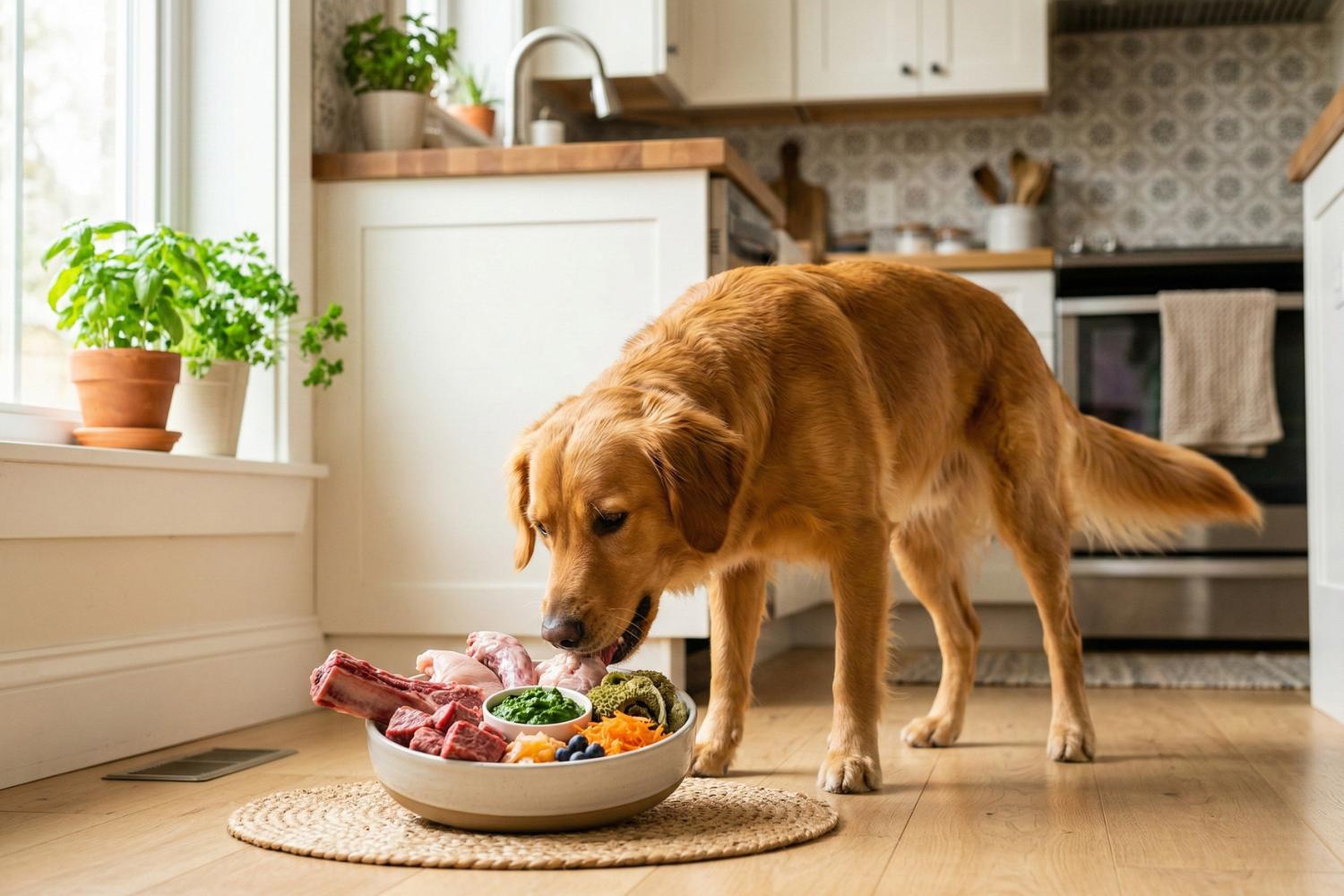
Raw dog food is a diet that consists of uncooked ingredients such as:
- Raw meat (beef, chicken, turkey, lamb)
- Organs (liver, kidney, heart)
- Bones (usually raw, not cooked)
- Vegetables and fruits (like carrots, spinach, blueberries)
- Supplements (like fish oil or probiotics for balance)
Unlike processed kibble or canned dog food, raw diets aim to mimic what a dog’s ancestors ate in the wild. Many owners report that their pets appear healthier, more energetic, and have shinier coats when switched to a raw diet.
Benefits of Feeding Your Dog Raw Dog Food
1. Improved Digestion
Raw dog food is high in natural enzymes, which can support better digestion. Dogs often experience less stool volume and firmer stools when fed a raw diet compared to conventional kibble.
2. Healthier Coat and Skin
The high protein and fatty acid content in raw meat helps maintain healthy skin and a shiny coat. Essential nutrients like omega-3 fatty acids found in raw fish or organ meats reduce shedding and promote skin hydration.
3. Stronger Teeth and Gums
Chewing raw bones can naturally clean your dog’s teeth, reducing plaque buildup and promoting healthy gums. Unlike synthetic dental chews, raw bones offer a natural and effective dental solution.
4. Increased Energy Levels
Dogs fed a raw diet often have higher energy levels due to the high-quality protein and nutrient density found in fresh, unprocessed ingredients.
5. Weight Management
Raw diets are naturally lower in carbohydrates, helping to maintain a healthy weight. Many owners notice their dogs have leaner muscles and less fat on a raw diet.
Potential Risks of Raw Dog Food
While raw feeding has many benefits, it’s important to understand the potential risks:
- Bacterial contamination: Raw meat can carry bacteria like Salmonella or E. coli.
- Nutritional imbalance: Feeding only certain meats or bones can lead to vitamin and mineral deficiencies.
- Choking hazards: Large bones or certain cuts of meat may pose a choking risk.
Choosing high-quality ingredients and following safe preparation methods can greatly reduce these risks.
Types of Raw Dog Food Diets
- BARF (Biologically Appropriate Raw Food): Combines raw meat, organs, bones, vegetables, and supplements.
- Prey Model Diet: Focuses mainly on whole prey items, with little to no plant matter.
- Commercial Raw Diets: Ready-to-feed raw meals available in frozen or freeze-dried forms, formulated to provide complete nutrition.
How to Transition Your Dog to a Raw Diet Safely
Transitioning to raw food should be gradual to prevent digestive upset.
Step 1: Start Slowly
Replace 10-20% of your dog’s current food with raw dog food. Monitor their digestion and energy levels for 3-5 days.
Step 2: Gradual Increase
Gradually increase the proportion of raw food over 1-2 weeks. Each dog adapts at a different pace, so flexibility is key.
Step 3: Introduce Variety
Include different protein sources, organ meats, and bones to ensure balanced nutrition. Rotate proteins to prevent allergies and nutrient gaps.
Step 4: Observe Your Dog
Watch for signs of digestive upset such as diarrhea, vomiting, or excessive gas. If problems persist, consult your veterinarian.
Step 5: Supplement if Needed
Depending on the diet composition, supplements like fish oil, vitamin E, or probiotics may be necessary to ensure your dog’s nutritional needs are fully met.
Tips for Preparing Raw Dog Food Safely
- Use fresh, high-quality ingredients from reputable sources.
- Keep raw food refrigerated and serve within safe time limits.
- Clean surfaces and utensils thoroughly to avoid cross-contamination.
- Avoid cooked bones, which can splinter and cause injuries.
- Wash hands thoroughly after handling raw meat.
Common Myths About Raw Feeding
Myth 1: Raw Diets Are Dangerous
While raw meat can carry bacteria, proper handling, storage, and hygiene significantly reduce risks.
Myth 2: Dogs Don’t Need Vegetables
While dogs are primarily carnivorous, vegetables provide fiber, vitamins, and antioxidants that support digestion and immunity.
Myth 3: Raw Feeding is Expensive
While raw diets may seem costly initially, many owners report that healthier dogs result in fewer vet visits and lower long-term health costs.
How to Choose the Right Raw Dog Food
- Look for balanced commercial formulas or follow reputable guidelines if preparing homemade meals.
- Choose proteins your dog enjoys and tolerates well.
- Avoid meats from questionable sources or those treated with hormones or antibiotics.
- Consider your dog’s age, size, and activity level when planning portions.
FAQs About Raw Dog Food
Q: Can puppies eat raw food?
A: Yes, but it’s important to ensure they receive all essential nutrients for growth, particularly calcium and protein.
Q: How long does it take for a dog to adjust?
A: Most dogs transition smoothly in 1-3 weeks, but some may take longer.
Q: Is raw food suitable for senior dogs?
A: Yes, it can help with joint health, coat condition, and energy levels. Adjust portion sizes as needed.
Q: Can I feed a mix of raw and kibble?
A: Yes, many dog owners use a combination diet, gradually transitioning to a fully raw diet if desired.
Conclusion
Feeding your dog a raw dog food diet can provide numerous health benefits, from shinier coats to stronger teeth and improved digestion. By understanding the risks, following safe preparation methods, and transitioning gradually, you can make raw feeding a positive experience for your dog. Always consult with a veterinarian, especially if your dog has health conditions, to ensure their nutritional needs are fully met.
A raw diet isn’t just a trend—it’s a return to the natural nutrition dogs thrived on for centuries. With care, patience, and quality ingredients, your dog can thrive on a raw diet, leading to a happier, healthier life.