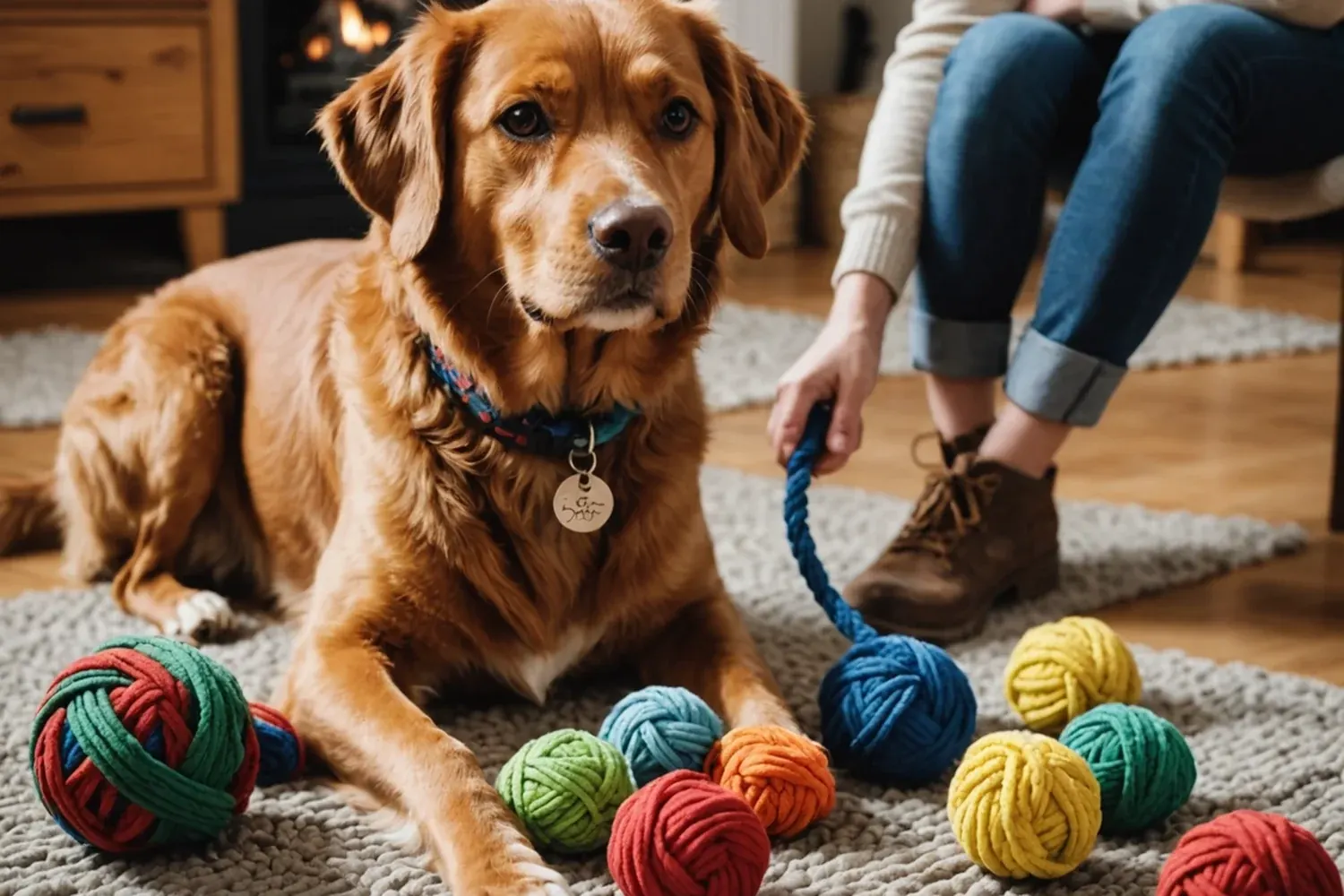
Making your own toys can be a simple and affordable way to keep your dog entertained. Many DIY dog toys can be created using everyday materials while still providing safe, engaging, and enriching play.
For dog owners who enjoy being hands-on, creating toys at home is also a great way to better understand what your dog enjoys. From tug toys to enrichment games, homemade toys can support both physical activity and mental stimulation.
Another benefit is control. When you make your own toys, you know exactly what materials your dog is interacting with.
Why Make DIY Dog Toys?
DIY dog toys are a great option for dog owners who want practical, flexible solutions for playtime.
Many people choose DIY dog toys to:
• save money on pet products
• reuse household materials
• customize toys for their dog’s size and play style
• create enrichment activities at home
Homemade toys can be especially useful for puppies or dogs that lose interest quickly. By rotating different DIY toys, you can keep playtime fresh and engaging.
They also provide a great opportunity to interact more with your dog and build a stronger bond through play.
Easy DIY Dog Toy Ideas
A simple indoor food search
Place a few pieces of your dog’s usual food in visible spots on a clear floor. Let them search while you supervise. Start with easy placements, then gradually make the search harder without putting food near electrical cords, small objects or furniture you do not want them climbing onto.
Count the food towards their daily allowance. Run the activity separately from other dogs if they compete over food.
A supervised towel search
For a dog that searches without chewing or swallowing fabric, place a few pieces of food in shallow folds of a clean towel laid flat on the floor. Keep the folds loose and remain beside your dog throughout.
Stop if they begin tearing, chewing or swallowing the towel. Skip this activity entirely if your dog has a history of eating fabric or other non-food objects. Put the towel away afterwards.
Make the activity suit your dog
Homemade enrichment does not need to involve a chew toy. Food searches and short training games can provide variety without turning socks, rope or plastic containers into toys.
Avoid cut plastic bottles with sharp edges, detachable caps and materials your dog can shred or swallow. Fabric and string can cause serious problems if ingested. If you suspect your dog has swallowed part of a toy, contact your veterinarian promptly.
How DIY Dog Toys Support Enrichment
Dogs need more than just physical exercise. Mental stimulation plays a big role in preventing boredom and unwanted behaviors.
DIY dog toys can help:
• reduce boredom and restlessness
• encourage problem-solving
• support natural instincts like sniffing and chewing
• provide interactive play opportunities
Enrichment toys like snuffle mats and treat puzzles are especially useful for keeping dogs occupied when you need quiet time at home.
Safety Tips for DIY Dog Toys
Check every item before and after use. Look for loose threads, torn fabric, exposed filling, sharp edges or missing pieces. Remove damaged items immediately. If a piece is missing and your dog may have swallowed it, contact your veterinarian rather than assuming it will pass.
Choose activities according to your dog’s behaviour. A dog that gently searches for food needs different materials from one that tears and eats objects. Supervision means watching closely enough to stop the activity; it does not make unsuitable materials safe.
Keep homemade items out of reach between sessions. Avoid strings, elastic bands, staples, glue and small attachments that could be swallowed. Do not leave a homemade toy with your dog while you are away.
If your dog guards food or toys, avoid reaching in to take an item by force. Separate pets for food activities and ask a qualified reward-based trainer for help planning suitable enrichment.
Balancing DIY and Store-Bought Toys
Use homemade activities for variety, and assess purchased toys according to their intended use, size and condition. A shop-bought toy is not automatically suitable for every dog, and a durable label does not mean it can be left unchecked.
Follow the manufacturer’s instructions and replace damaged toys. If your dog repeatedly tears apart or swallows objects, discuss suitable activities with your veterinarian and a qualified trainer before offering more materials.
For more dog-care articles and information about Pupify, explore our resources for dog owners.
For more ideas, read our guides to eco-friendly dog toys and choosing toys for small dogs.
Final Thoughts on DIY Dog Toys
Homemade enrichment can be as simple as a supervised food search. Choose activities that suit your dog’s behaviour, inspect any materials used and put them away after the session. Skip fabric-based activities if your dog chews or swallows fabric.
Rotate suitable activities, include food rewards in your dog’s daily allowance and stop when an item becomes damaged or your dog struggles with the task. The aim is enjoyable interaction suited to your individual dog.