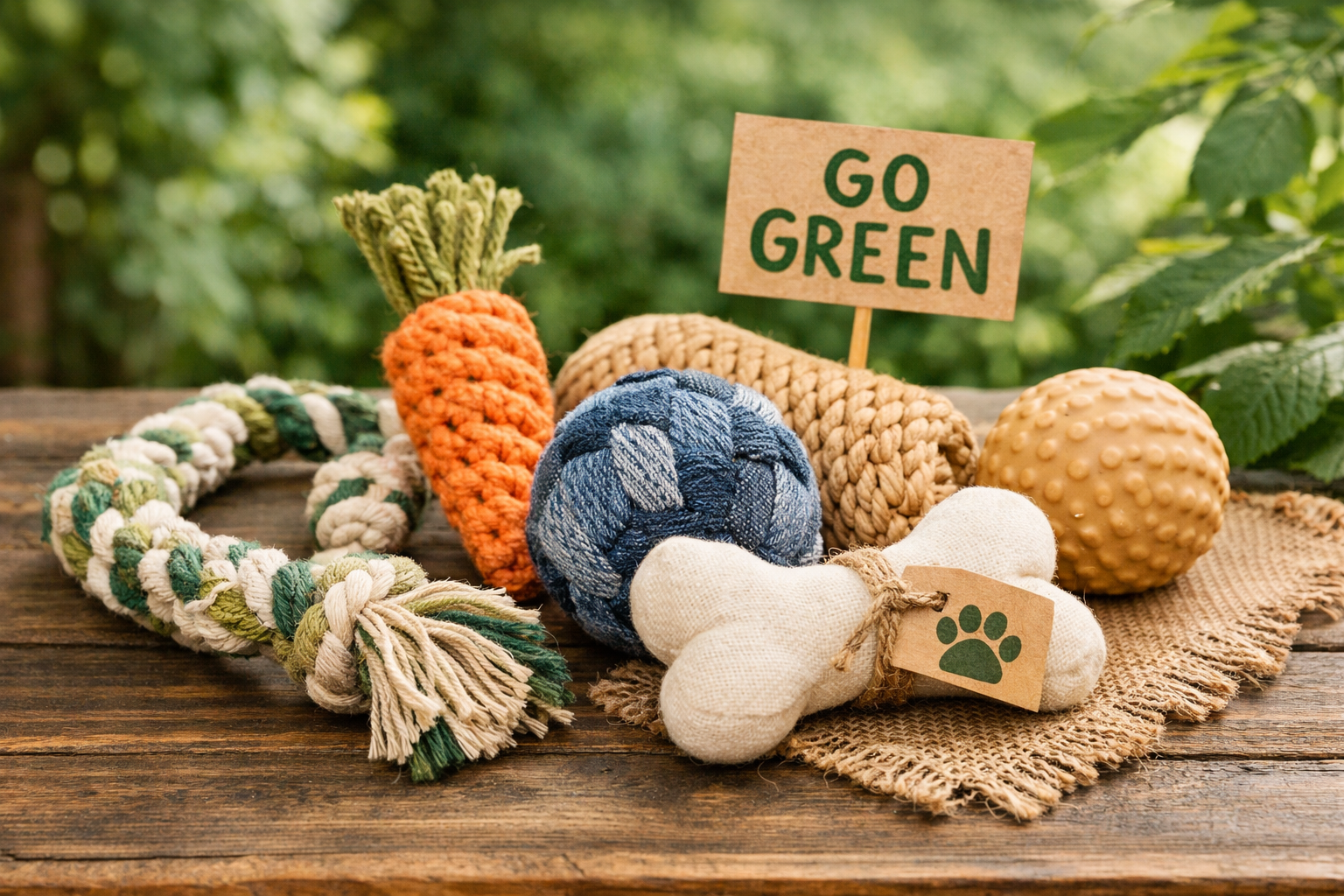
Eco-friendly dog toys may use recycled materials, responsibly sourced fibres or less packaging. To compare them, look for specific information about the individual product.
This guide explains what to ask about materials, construction, cleaning and disposal. It also separates environmental claims from the checks needed to choose a toy that suits your dog’s size and play habits.
You can explore dog businesses and product listings through Pupify, then ask sellers for any details missing from their descriptions.
What Makes a Dog Toy Eco-Friendly?
An eco-friendly claim should explain which part of a toy’s materials, production, packaging or disposal reduces its environmental impact.
For example, a manufacturer might state that a toy contains a particular percentage of recycled fabric, uses rubber from a named certified source or comes in packaging accepted by local recycling programs.
Check what the claim covers. Recyclable packaging does not mean the toy itself is recyclable. A biodegradable material also needs specific disposal conditions; ask whether the claim applies to home composting or an industrial facility.
Look for clear product information rather than relying on words such as “green” or “natural.” Small-batch production alone does not establish better quality control or less waste.
Evaluate the environmental claim separately from whether the toy’s size, construction and intended use suit your dog.
Why More Dog Owners Are Choosing Eco Friendly Dog Toys
Dog owners may choose these toys to reduce waste, use recycled materials or support businesses that explain how their products are made.
Compare specific details rather than assuming every eco-friendly toy offers the same benefits. Look for:
- A stated percentage of recycled material.
- Clear information about where materials come from.
- Cleaning instructions that make continued use practical.
- Specific disposal guidance for the complete toy.
- Construction suited to your dog’s play habits.
Natural materials, small-batch production and an environmental label do not automatically mean a toy is safer or lasts longer. Ask the seller what supports those claims before buying.
Popular Types of Eco Friendly Dog Toys
Eco-friendly dog toys come in different materials, but choose by the individual toy’s construction and intended use.
Hemp or cotton rope toys: Check the manufacturer’s play instructions and inspect the strands before use. Remove the toy if it starts shedding loose threads. Natural fibres do not make swallowed pieces safe.
Organic cotton toys: Check the filling, stitching and any squeaker as well as the outer fabric. “Organic cotton” does not establish that the complete toy is suitable for puppies or small dogs.
Recycled fabric toys: Ask which parts contain recycled material and how much. Check for secure seams and follow the cleaning instructions.
Natural rubber toys: Choose the size and firmness recommended for your dog. Natural rubber is a material description, rather than a guarantee of safety or durability.
Whatever the material, supervise play and replace damaged toys. Choose something that suits how your dog plays, rather than relying on the environmental label alone.
Supporting Sustainable Pet Businesses
When buying from a small pet business or independent maker, ask the same practical questions you would ask a larger manufacturer: what is the toy made from, how should it be used and cleaned, and what supports its environmental claims?
Look for clear product descriptions and a way to contact the seller. The size of a business alone does not establish that its products are safer, more durable or better for the environment.
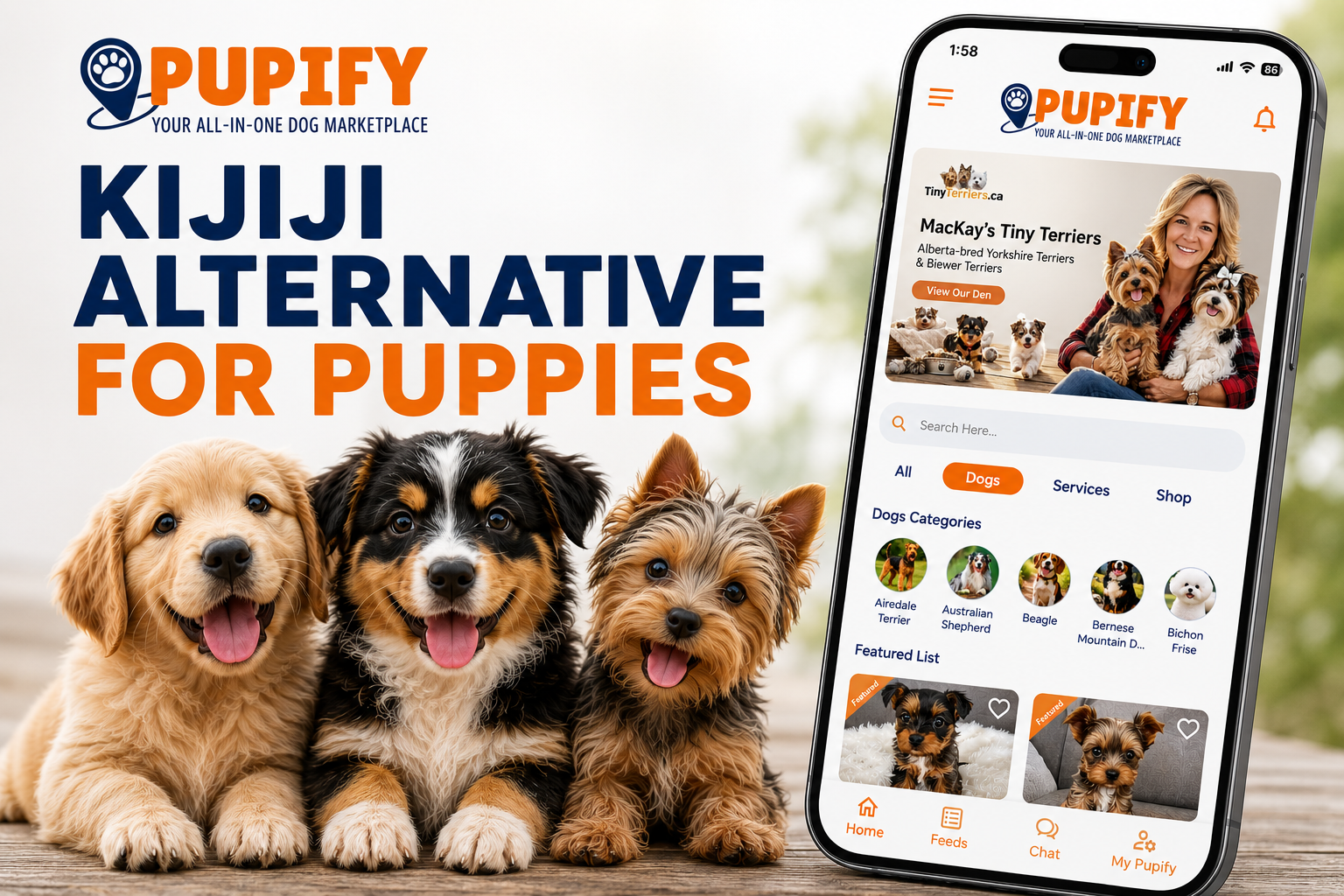
Pupify connects dog owners with breeders, dog businesses, services and products. When exploring a product listing, use the details provided to decide what to ask the seller before buying.
How Eco Friendly Dog Toys Connect to Safer Play
Many dog owners who explore eco friendly dog toys also begin looking into safer toy options overall.
If you’re interested in learning more about safe materials and construction, you may also want to read Why Safe Dog Toys Matter: How to Choose Better, Safer Options for Your Dog.
You can also read our DIY dog toys guide for supervised activities and checks to make before using homemade toys.
These articles work together to help dog owners make more informed decisions.
Before You Buy: Check the Toy and the Environmental Claim
“Natural,” “recycled” and “eco-friendly” describe different things. None tells you, by itself, whether a toy suits your dog or how to dispose of it.
Before buying, check these details:
- The whole toy: Ask what the outer fabric, filling, stitching, coating and any squeaker are made from. A recycled cover does not tell you what is inside.
- The environmental claim: Look for a specific explanation, such as the percentage of recycled material or the source of the rubber. If the seller mentions certification, check what it covers.
- The intended use: Read the manufacturer’s size and play recommendations. A toy intended for supervised tugging should not automatically be treated as a chew toy.
- Cleaning instructions: Check whether the toy can be washed, how it should be dried and whether repeated washing affects its construction.
- Disposal instructions: Ask whether the complete toy can be recycled or composted, and under what conditions. Check your local program before putting it in either bin.
For example, a fabric toy might contain recycled material but also have synthetic filling and a plastic squeaker. Its recycled content and its disposal options are separate questions.
Inspect toys before each session. Follow the manufacturer’s replacement instructions and stop using a toy if its seams open, filling becomes exposed or pieces come loose. An environmental claim is not a reason to keep a damaged toy in use.
Buying fewer toys that suit your dog’s actual play habits is a more practical starting point than replacing everything because a package says “green.”
Final Thoughts on Eco Friendly Dog Toys
Choose an eco-friendly dog toy by checking what its environmental claims actually cover and whether its construction suits your dog’s play habits.
Before buying, confirm the materials, intended use, cleaning instructions and disposal options. Keep inspecting the toy during use, and remove it when damage exposes filling or creates loose pieces.
You do not need to replace every toy at once. Start with your next purchase: compare specific product details and ask the seller about anything unclear.