When the lights go out, your dog still seems confident—walking around, finding toys, and even reacting to movement. This often makes pet owners wonder: can dogs see in darkness, or are they just relying on their other senses?
The truth is fascinating. Dogs don’t see in complete darkness the way some myths suggest, but their vision is far superior to humans in low-light conditions. Understanding how your dog sees the world at night can help you better care for them and keep them safe.
In this guide, we’ll break down everything you need to know about canine night vision, including how it works, how it compares to humans, and what it means for your dog’s daily life.
Can Dogs See in Darkness? The Simple Answer
Let’s clear it up right away:
Dogs cannot see in total darkness, just like humans. If there is absolutely no light, your dog won’t be able to see either.
However, dogs are incredibly good at seeing in low-light environments—much better than humans. So when it feels pitch black to you, your dog may still see shapes, movement, and objects with ease.
This ability comes from specialized structures in their eyes that are designed for night vision.
How Dog Vision Works in Low Light
Dogs have evolved from nocturnal hunters, and their eyes reflect that history. Several key features make their night vision superior:
1. Tapetum Lucidum (The Night Vision Booster)
Dogs have a reflective layer behind their retina called the tapetum lucidum. This structure reflects light back through the retina, giving photoreceptors a second chance to detect it.
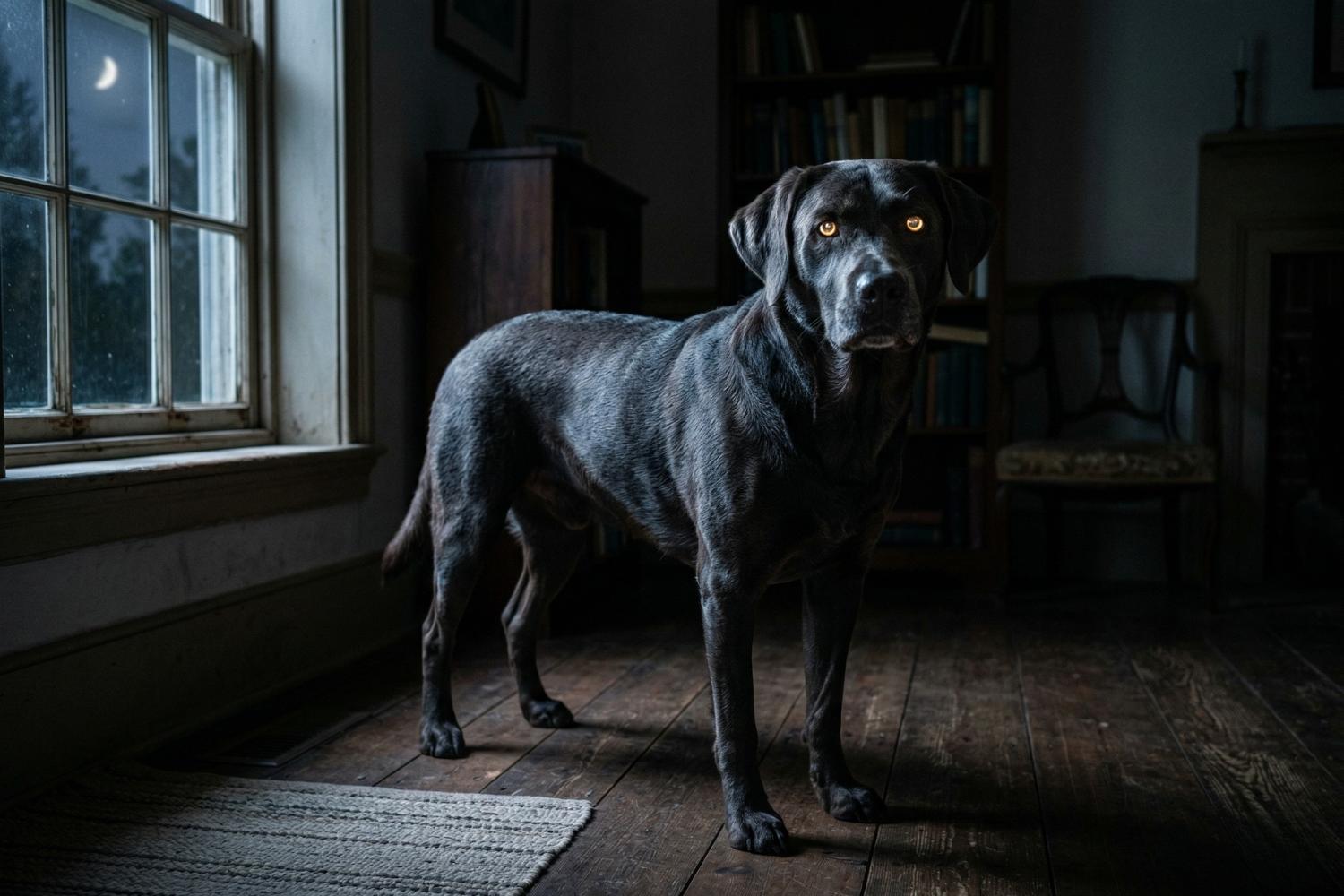
That’s also why your dog’s eyes glow in the dark when light hits them.
👉 This is the biggest reason why can dogs see in darkness better than humans—it essentially amplifies available light.
2. More Rod Cells Than Humans
Rod cells are responsible for detecting light and motion. Dogs have a higher number of rod cells compared to humans.
This means:
- Better motion detection
- Improved night vision
- Enhanced sensitivity in dim light
3. Larger Pupils
Dogs’ pupils can expand more than human pupils, allowing more light to enter the eye. This is another advantage in low-light environments.
Dogs vs Humans: Who Sees Better at Night?
Let’s compare:
| Feature | Dogs | Humans |
|---|---|---|
| Night Vision | Excellent | Poor |
| Color Vision | Limited | Strong |
| Motion Detection | Superior | Moderate |
| Daytime Clarity | Lower | Higher |
Dogs trade off sharp daytime vision and color accuracy for better night performance.
Do Dogs See in Complete Darkness?
No—this is one of the most common myths.
Even though dogs are amazing at seeing in low light, they still need some level of light to detect objects. In complete darkness, they rely on other senses like:
- Smell (their strongest sense)
- Hearing
- Memory of surroundings
So while the answer to can dogs see in darkness is technically “no,” they can still navigate surprisingly well without light.
How Dogs Use Their Other Senses at Night
When vision becomes limited, dogs switch to their powerful secondary senses.
1. Smell
Dogs have up to 300 million scent receptors, compared to about 5 million in humans. This allows them to “map” their environment through scent.
2. Hearing
Dogs can hear higher frequencies and detect subtle sounds humans can’t. This helps them identify movement in the dark.
3. Spatial Memory
Dogs remember the layout of familiar spaces, which helps them move confidently even in near darkness.
What Colors Do Dogs See at Night?
Dogs don’t see the full spectrum of colors like humans. Their vision is closer to:
- Blues
- Yellows
- Grays
At night, their color perception becomes even more limited. They mostly see shades and movement rather than distinct colors.
Signs Your Dog May Have Poor Night Vision
While most dogs naturally see well in low light, some may struggle. Watch for these signs:
- Bumping into objects at night
- Hesitation in dim lighting
- Reluctance to go outside after dark
- Increased anxiety in low-light environments
If you notice these symptoms, it could be related to aging or conditions like cataracts.
Common Eye Conditions Affecting Night Vision
Certain health issues can reduce your dog’s ability to see in low light:
1. Cataracts
Clouding of the eye lens, often seen in older dogs.
2. Progressive Retinal Atrophy (PRA)
A degenerative condition that often starts with night blindness.
3. Glaucoma
Increased pressure in the eye, which can affect vision over time.
If you suspect any of these, consult a veterinarian promptly.
How to Help Your Dog Navigate at Night
Even though dogs are naturally good at night vision, you can make things easier for them:
- Keep a dim night light in key areas
- Avoid rearranging furniture frequently
- Use verbal cues to guide them
- Ensure outdoor spaces are safe and enclosed
The Evolutionary Advantage of Night Vision
Dogs descended from wolves, who were crepuscular hunters—most active at dawn and dusk.
Their ability to see in low light helped them:
- Hunt prey
- Detect predators
- Navigate forests and open land
This evolutionary trait still benefits modern dogs today.
How Pupify Supports Dog Owners
At Pupify, we understand that every dog owner wants the best for their pet. Pupify is a connection-based marketplace platform that connects independent buyers and independent sellers of dog-related products.
Whether you’re looking for accessories, care products, or essentials, Pupify makes it easier to discover options from trusted sellers—all in one place.
Final Thoughts: Can Dogs See in Darkness?
So, can dogs see in darkness?
Not in complete darkness—but they are far better than humans at seeing in low-light conditions. Thanks to their unique eye structure and powerful senses, dogs can navigate dim environments with ease.
Understanding how your dog sees the world helps you provide better care, especially at night. With a little support and awareness, you can ensure your dog stays safe, confident, and comfortable—no matter how dark it gets.