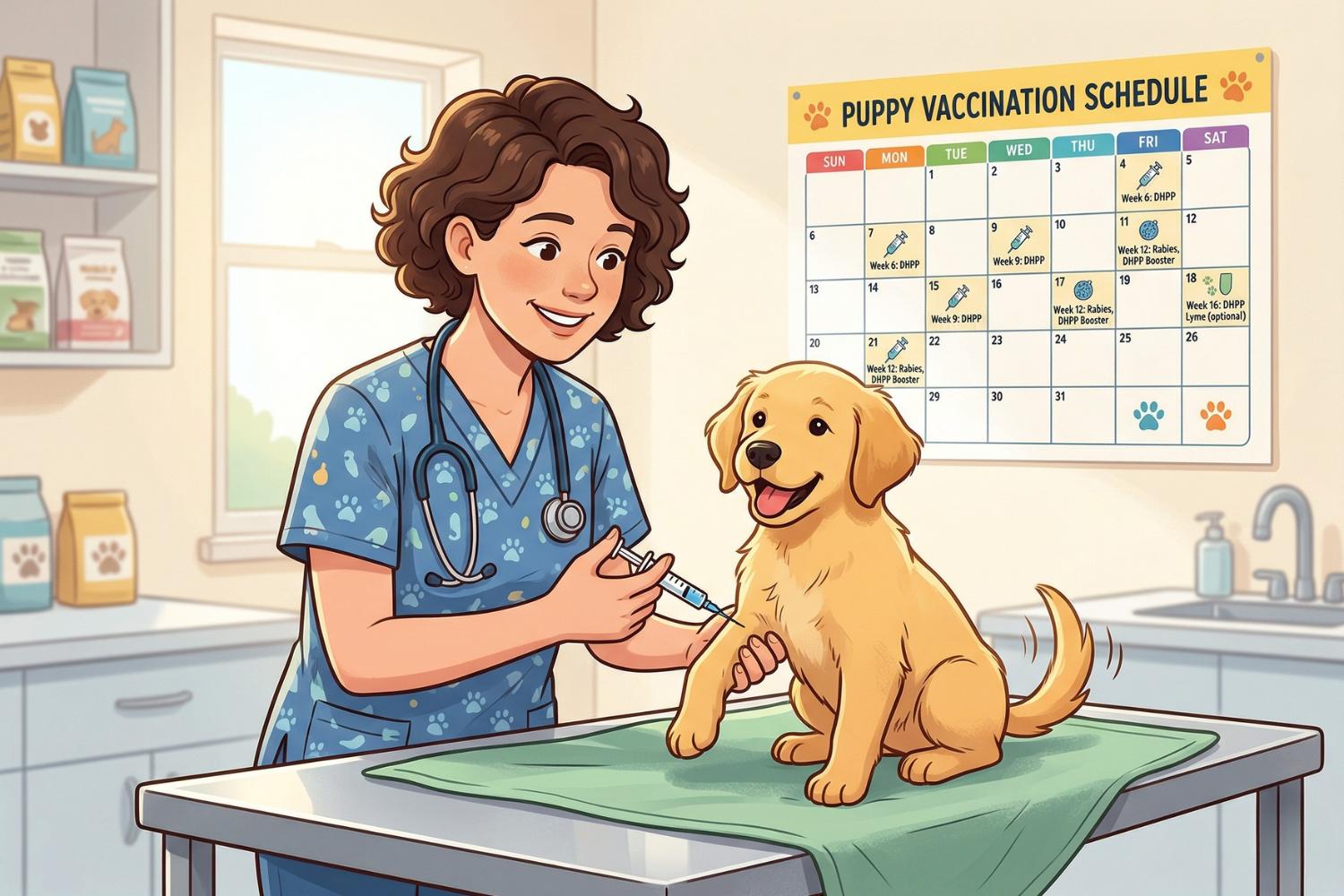
Your dog’s vaccination plan should reflect their age, previous doses, health and exposure risks. There is no single injection schedule that applies to every puppy or adult dog. This guide explains what records to bring, which questions to ask your veterinarian and how to keep track of the plan they recommend.
1. Why Vaccinations Are Essential for Dogs
Vaccines are critical to protect dogs against infectious diseases, some of which can be fatal. Common diseases prevented through vaccines include:
- Parvovirus
- Distemper
- Rabies
- Adenovirus
Following your veterinarian’s vaccination plan helps reduce the risk of specific infections. Vaccination is one part of preventive care and does not guarantee that your dog will remain healthy throughout their life.
2. Planning Your Puppy’s Vaccinations
Take your puppy’s existing vaccination records to your veterinarian. Ask them to review the dates, products used and your puppy’s age before setting the next appointments. If records are missing or unclear, tell the clinic rather than guessing which doses were given.
Puppies usually need a series of vaccinations because protection received from their mother can interfere with the response to early doses. Your veterinarian will choose the timing and number of doses according to the vaccine, your puppy’s history and relevant risks. A fixed three-visit table cannot confirm that every puppy’s series is complete.
Ask for a written plan showing the vaccine names, next appointment dates and any follow-up doses. Discuss local disease exposure, contact with other dogs and planned travel or boarding.
Also ask how to manage socialisation while the series is underway. Do not assume that one injection makes every public setting appropriate, or that your puppy must avoid all new experiences. Your veterinarian can help you plan suitable activities for your circumstances.
3. Reviewing an Adult Dog’s Vaccination Plan
An adult dog’s next vaccination date depends on the specific vaccine, previous doses, product instructions, health history and applicable requirements. Do not apply one booster interval to every vaccine.
Bring existing records to the appointment, including those from a previous owner, rescue or clinic. Ask which vaccinations are due now, which are due later and why each is recommended. If the history is unknown, your veterinarian can plan an appropriate course.
Review changes in lifestyle, such as starting daycare, boarding, travelling or moving to another region. Tell the clinic about previous reactions, current medicines and relevant health conditions before vaccination.
Ask for written next-due dates and keep a copy of the vaccination certificate. A reminder helps you follow the plan, but it should reflect the clinic’s recommendations rather than a generic online schedule.
4. Types of Dog Vaccines
Veterinary guidelines distinguish between vaccines recommended broadly and those selected according to exposure risk. Recommendations can change as evidence and disease patterns develop, so ask your veterinarian which current guidelines apply to your dog and location.
Discuss the diseases each vaccine targets rather than relying only on abbreviations such as DHPP. Combination products may contain several components, and the details should appear in your dog’s records.
Some vaccines are administered by injection; others may be given through the nose or mouth. The route, initial course and booster timing depend on the particular product.
Ask the clinic to explain each recommendation in plain language, including what protection it provides, any additional doses needed and when the next review is due.
5. Vaccination Side Effects and Safety
Ask your veterinarian what to expect after the vaccines your dog receives and how to contact the clinic if concerns arise. Mild effects can include temporary tiredness, reduced appetite or tenderness at the injection site. Contact the clinic if symptoms persist, worsen or concern you.
Difficulty breathing or collapse requires immediate emergency veterinary care. Facial swelling, hives, or persistent vomiting or diarrhoea also need immediate veterinary attention rather than waiting for them to settle.
Record when symptoms began and which vaccines were given, and provide that information to the treating veterinarian. Tell the clinic about any previous reaction before future vaccinations so they can plan appropriate care. Do not give medicines for a suspected reaction unless a veterinarian directs you.
6. Tips for Stress-Free Vaccinations
- Schedule appointments during calm times of the day.
- Bring a favorite toy or treat to reward your dog.
- Stay calm yourself; dogs pick up on your anxiety.
- Maintain a vaccination record for easy tracking.
Following these tips makes adhering to the dog injection schedule much easier for both you and your pet.
7. Travel and Vaccination Requirements
Check the official entry requirements for your destination and any countries you will travel through. Requirements can depend on your dog’s age, origin, travel purpose and documentation, so a general vaccination guide cannot confirm eligibility.
Contact your veterinarian well before booking. Share your travel dates and ask whether certificates, identification, vaccinations or other steps need to be completed within specific timeframes.
Check boarding and daycare policies separately. A facility may require particular vaccination records or a waiting period before attendance. Ask for its current written policy rather than assuming the same rules apply everywhere.
Keep copies of the documents you need and confirm that the details match your dog’s identification. Recheck requirements close to departure in case they have changed.
8. Keeping Track of Your Dog’s Vaccination Schedule
- Use a digital app or calendar to record vaccination dates.
- Mark reminders for booster shots.
- Bring records to every veterinary visit.
Set reminders using the next-due dates supplied by your clinic. If an appointment is missed or your plans change, contact the clinic to confirm the next step rather than adjusting the schedule yourself.
Conclusion
Vaccinations help protect dogs against specific infectious diseases, but they do not guarantee lifelong health or eliminate every risk. Follow the plan your veterinarian recommends for your individual dog, keep accurate records and review changes in lifestyle or travel before the next appointment.
Ask the clinic about next-due dates, precautions while a puppy’s series is underway and what to do if a reaction occurs. Use this guide to prepare for that conversation rather than to choose or administer vaccines yourself.
For more dog-care articles and information about Pupify, explore our resources for dog owners.