Dog grooming is more than just keeping your dog looking adorable—it’s essential for their health, comfort, and overall wellbeing. Whether you’re a new dog owner or looking to save money by grooming at home, learning the basics can make a huge difference in your dog’s life.
Proper dog grooming helps prevent skin problems, reduces shedding, and strengthens the bond between you and your furry friend. In this guide, we’ll cover everything beginners need to know for safe and effective home grooming.
Why Dog Grooming Is Important
Regular dog grooming isn’t just about appearances. Grooming:
- Prevents matting and tangles – Knots can cause discomfort and skin irritation.
- Supports skin health – Brushing and bathing remove dirt, dead hair, and bacteria.
- Helps detect health issues early – Lumps, bumps, or parasites are easier to spot.
- Reduces shedding – Brushing removes loose hair before it ends up all over your home.
- Strengthens the bond – Grooming is a form of care and attention that dogs love.
Essential Dog Grooming Tools for Beginners
Before you start, gather the right tools for dog grooming:
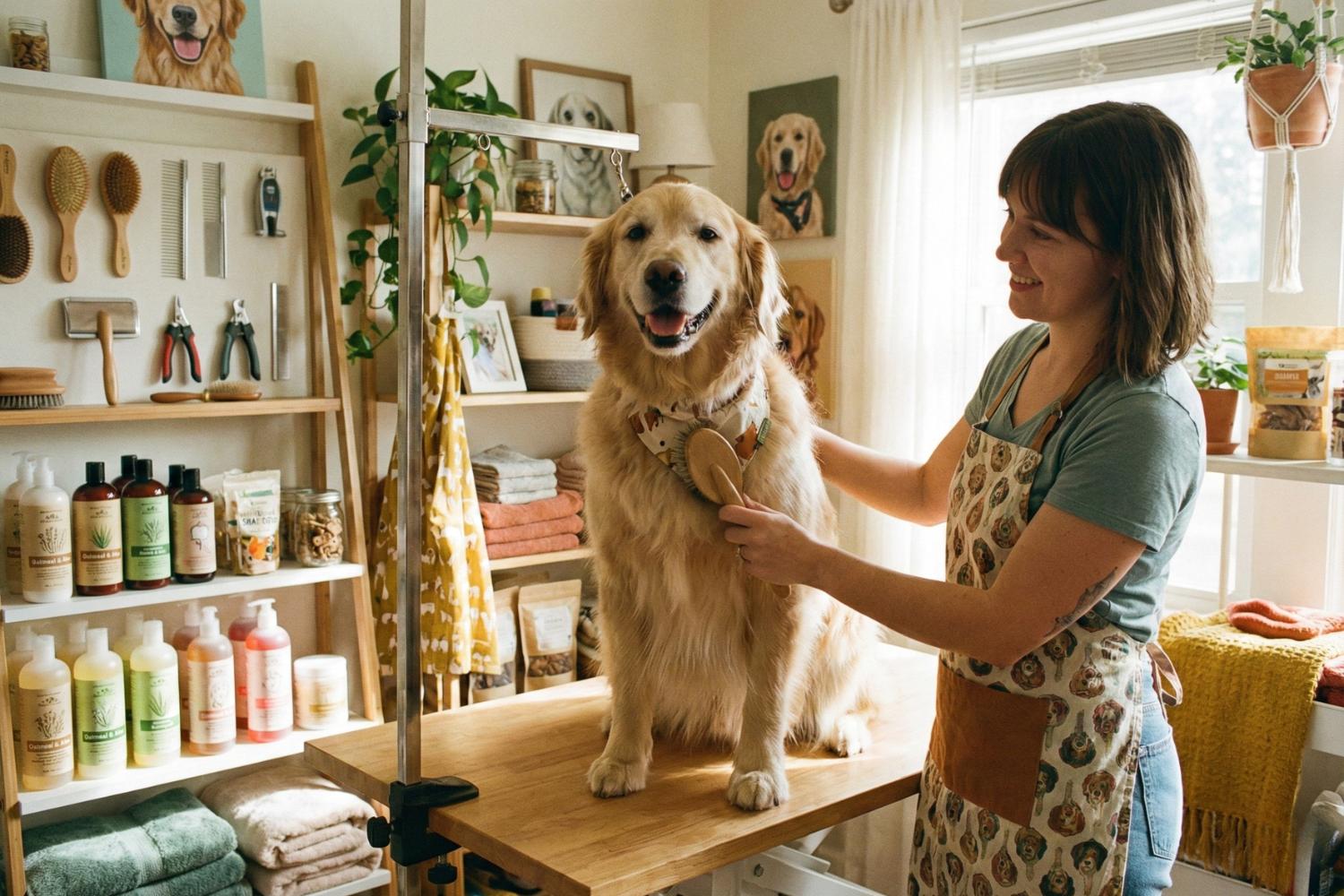
- Brushes and Combs – Slicker brushes for tangles, pin brushes for long hair, and metal combs for finishing.
- Dog Shampoo & Conditioner – Choose formulas suitable for your dog’s coat type.
- Nail Clippers or Grinder – For safe and precise nail trimming.
- Ear Cleaning Solution – Prevents infections and removes wax buildup.
- Towels & Blow Dryer – Microfiber towels and a pet-safe dryer are ideal.
- Grooming Table or Mat – Helps keep your dog in place safely.
Brushing Your Dog
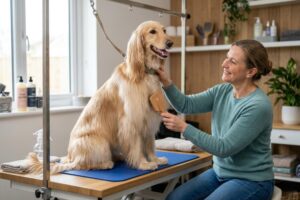
Brushing is the cornerstone of dog grooming at home.
How to Brush Your Dog Properly:
- Choose the right brush for your dog’s coat type.
- Start gently at the head and work toward the tail.
- Check for tangles and mats, using a detangling spray if needed.
- Brush in the direction of hair growth to avoid discomfort.
- Brush regularly – daily for long-haired dogs, 2–3 times a week for short-haired breeds.
Tip: Make brushing a positive experience by offering treats and praise.
Bathing Your Dog
Bathing keeps your dog clean and healthy but should be done carefully:
- Brush before bathing – removes tangles and loose fur.
- Use lukewarm water to avoid discomfort.
- Apply dog shampoo – avoid human shampoos as they can irritate your dog’s skin.
- Rinse thoroughly – leftover shampoo can cause itching.
- Dry your dog gently with a towel and, if tolerated, a pet dryer.
Bathing Frequency: Most dogs need a bath every 4–6 weeks, but it varies by breed and lifestyle.
Nail Trimming
Overgrown nails can hurt your dog and cause walking difficulties.
Nail Trimming Tips:
- Use proper dog nail clippers or a grinder.
- Trim small amounts gradually to avoid cutting the quick.
- Have styptic powder ready in case of bleeding.
- Reward your dog with praise and treats.
Tip: If your dog resists, trim one or two nails at a time to build comfort.
Ear Cleaning
Look at your dog’s ears during grooming, but do not assume they need cleaning on a fixed schedule. Healthy ears may need little cleaning, and over-cleaning can cause irritation.
If you notice redness, swelling, pain, an unusual smell or discharge, contact your veterinarian before cleaning. These signs may need examination and treatment rather than a routine wipe.
Ask your vet whether your dog needs an ear-cleaning routine, which product to use and how to apply it. Follow their instructions and the product directions. Do not insert cotton swabs or other objects into the ear canal.
Introduce gentle ear handling gradually with rewards. Stop if your dog appears painful or distressed, and seek advice rather than restraining them to finish.
Dental Care
Oral hygiene is an often-overlooked part of dog grooming:
- Brush teeth 2–3 times a week with dog-safe toothpaste.
- Provide dental chews to reduce plaque.
- Schedule vet dental check-ups annually.
Coat Trimming and Styling
Ask a professional groomer which care routine suits your dog’s coat before attempting a haircut. Different coat types need different tools and techniques; not every dog benefits from the same trimming approach.
For beginners, leave trimming close to the eyes, ears, skin folds and paw pads to an experienced professional. A dog moving suddenly can make these areas difficult to work around.
Do not cut out a tight mat with scissors. Skin can be pulled into the mat and be difficult to distinguish from hair. Stop if brushing causes pain or you cannot gently separate a tangle, and arrange professional help. Seek veterinary advice if the skin looks sore or damaged.
Handling Shedding
Shedding is normal but manageable:
- Brush regularly to remove loose hair.
- Use deshedding tools for heavy shedders.
- Maintain a healthy diet – Nutrients support coat health.
Your First Grooming Session: Start With One Small Task
Begin with a brief introduction rather than attempting a bath, nail trim and full brushing session together. Choose a quiet area with a non-slip surface and have your brush and rewards ready. Let your dog move away if they need a break.
For example, start with gentle brushing over an area your dog already accepts being touched, such as the shoulder. Make one or two light strokes, then pause and reward calm participation. Check the skin and coat as you go. Do not pull through a knot or keep brushing a sore-looking area.
Watch your dog’s response rather than working towards a fixed session length. Turning away, becoming tense, repeatedly trying to leave or growling means you should pause and make the next attempt easier. Avoid holding your dog down to finish the task.
Finish after a small success and put the tools away. On another day, repeat that familiar step before introducing something new. Keep a note of what your dog accepted, which tool you used and where they seemed uncomfortable.
Ask a professional groomer to demonstrate techniques suited to your dog’s coat. Seek veterinary advice for pain, skin changes or sudden sensitivity to handling.
Making Grooming Stress-Free
Tips to make dog grooming enjoyable for beginners:
- Keep sessions short – 10–15 minutes for beginners.
- Stay calm and patient – Dogs sense frustration.
- Use positive reinforcement – treats, toys, and praise.
- Establish a routine – Regular grooming becomes familiar and easier.
Safety Tips for Beginner Groomers
- Never leave your dog unattended on a grooming table.
- Avoid harsh products – Only use dog-safe shampoos and conditioners.
- Be cautious with clippers and scissors – Accidental cuts can happen.
- Watch for signs of stress – Panting, whining, or attempts to escape.
When to Seek Professional Help
Contact a professional groomer for tight mats, unfamiliar coat-care techniques or tasks you cannot complete comfortably. Tell them about your dog’s previous grooming experiences and any handling difficulties so they can plan the appointment.
Contact your veterinarian for pain, inflamed skin, unusual lumps, suspected parasites or ear symptoms. A grooming appointment does not replace a medical assessment.
For more dog-care articles and information about Pupify, explore our resources for dog owners.
Conclusion
Home dog grooming is achievable with the right tools, patience, and routine. Regular brushing, bathing, nail trimming, ear cleaning, and dental care help maintain a healthy, happy, and beautiful dog. By following these steps, even beginners can confidently groom their dogs while strengthening their bond.